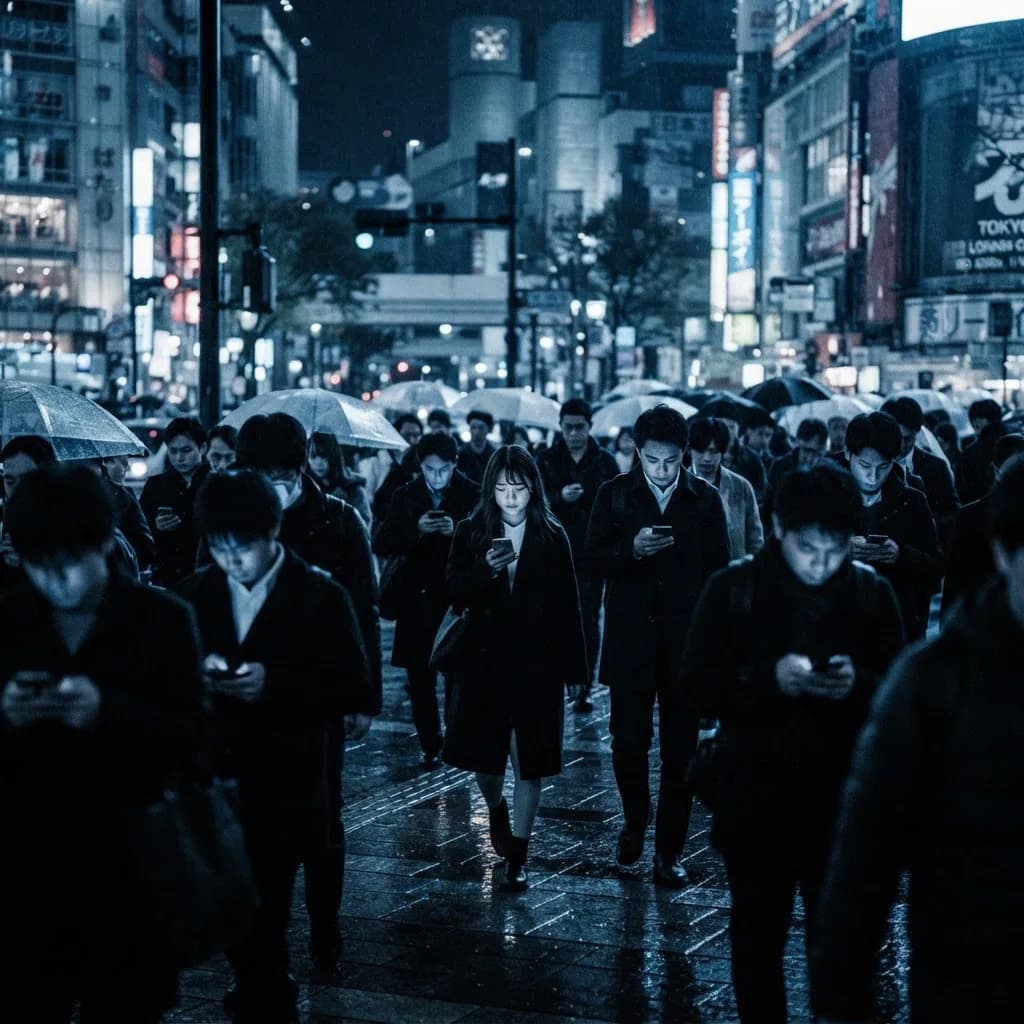
A comprehensive analysis of social connection data across 40 countries reveals a paradox: the most digitally connected populations report the deepest feelings of isolation.
The research, compiled by three independent institutions and analyzed here for the first time, maps loneliness against digital connectivity, urban density, and working patterns. The picture it produces challenges most of the narratives currently dominating policy conversations.
Remote work, often blamed for social erosion, shows a complex signal. People who work remotely within strong existing social networks report higher wellbeing than their office counterparts. Those who came of professional age during remote work's expansion — having built fewer anchoring relationships — report significantly worse outcomes.
The age curve is particularly striking. Loneliness peaks twice: in the early twenties and again in the mid-sixties. The intervening decades, filled with the relational density of careers and families, offer a kind of structural protection that appears to be weakening.