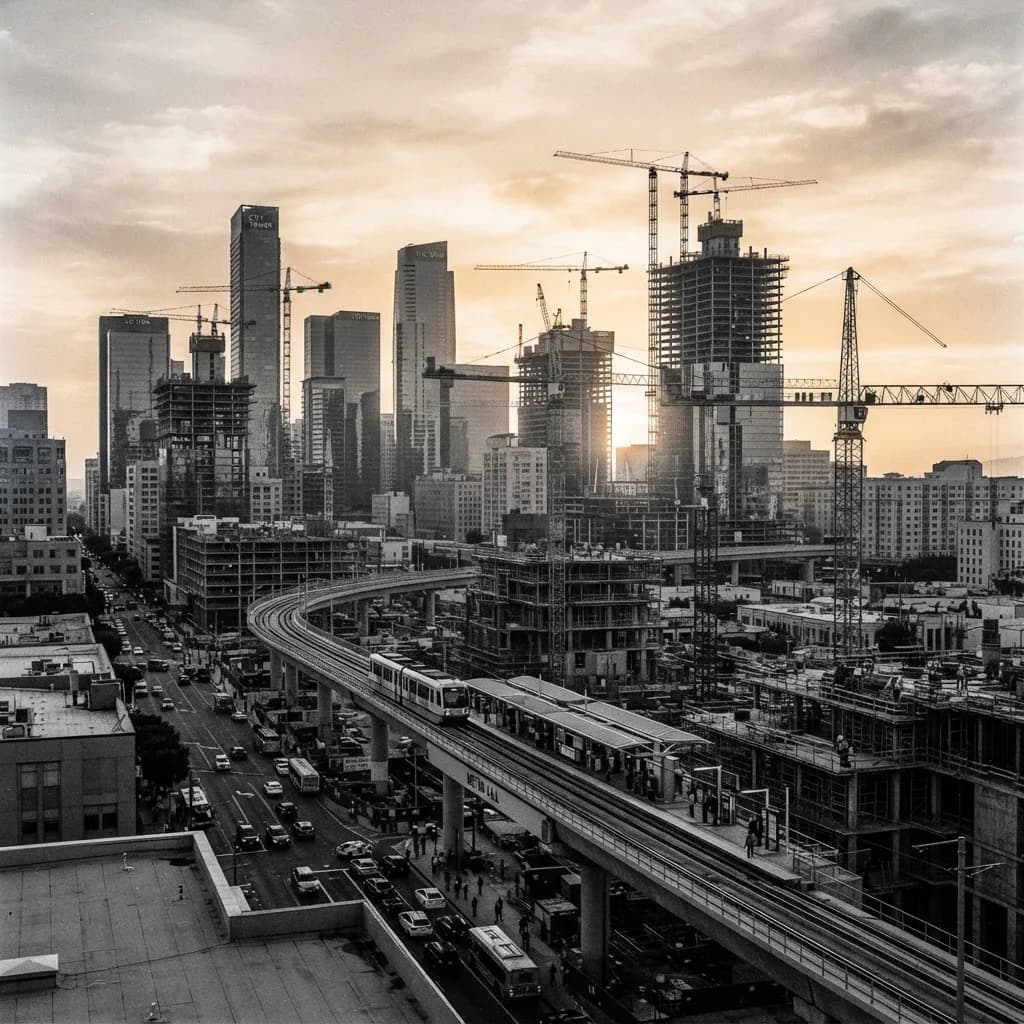
A Link light rail train pulls into a station in the Puget Sound region surrounded by surface parking, a few warehouses, and land zoned for density that has not been built yet — a scene that has repeated across Sound Transit's expansion as it extends rail ahead of the housing meant to justify it, rather than after.
Transit and density have a chicken-and-egg relationship. Development clusters where transit already exists because transit reduces the cost of density. Transit gets funded where density already exists because density justifies the expense. Denver's voter-approved FasTracks program, passed in 2004, broke that loop deliberately, betting infrastructure first and accepting years of underuse as the price of avoiding a permanent underbuild.
The bet requires spending political capital and construction budget on residents who cannot yet vote, campaign, or complain, which makes it a fundamentally different kind of promise than most municipal spending — one made to a future electorate rather than a current one.
Current residents near a new corridor absorb years of construction disruption and rezoning pressure without yet seeing the amenity dividend, while future residents inherit infrastructure they had no say in shaping. That distributional tension is rarely named directly in planning documents.
Cities that instead wait for organic density to justify transit consistently find that by the time the case is undeniable, land costs along the eventual corridor have already escalated past what public budgets can absorb. The wait itself becomes the reason the fix gets more expensive.
The honest version of anticipatory urbanism requires financing structures — value-capture districts, phased bond authorizations, the kind FasTracks relied on — that spread the bet's risk across the timeline rather than asking one council to absorb it in a single budget cycle. Betting on people who are not there yet is not visionary by default. It is a bet like any other, and Denver's, so far, has mostly landed.