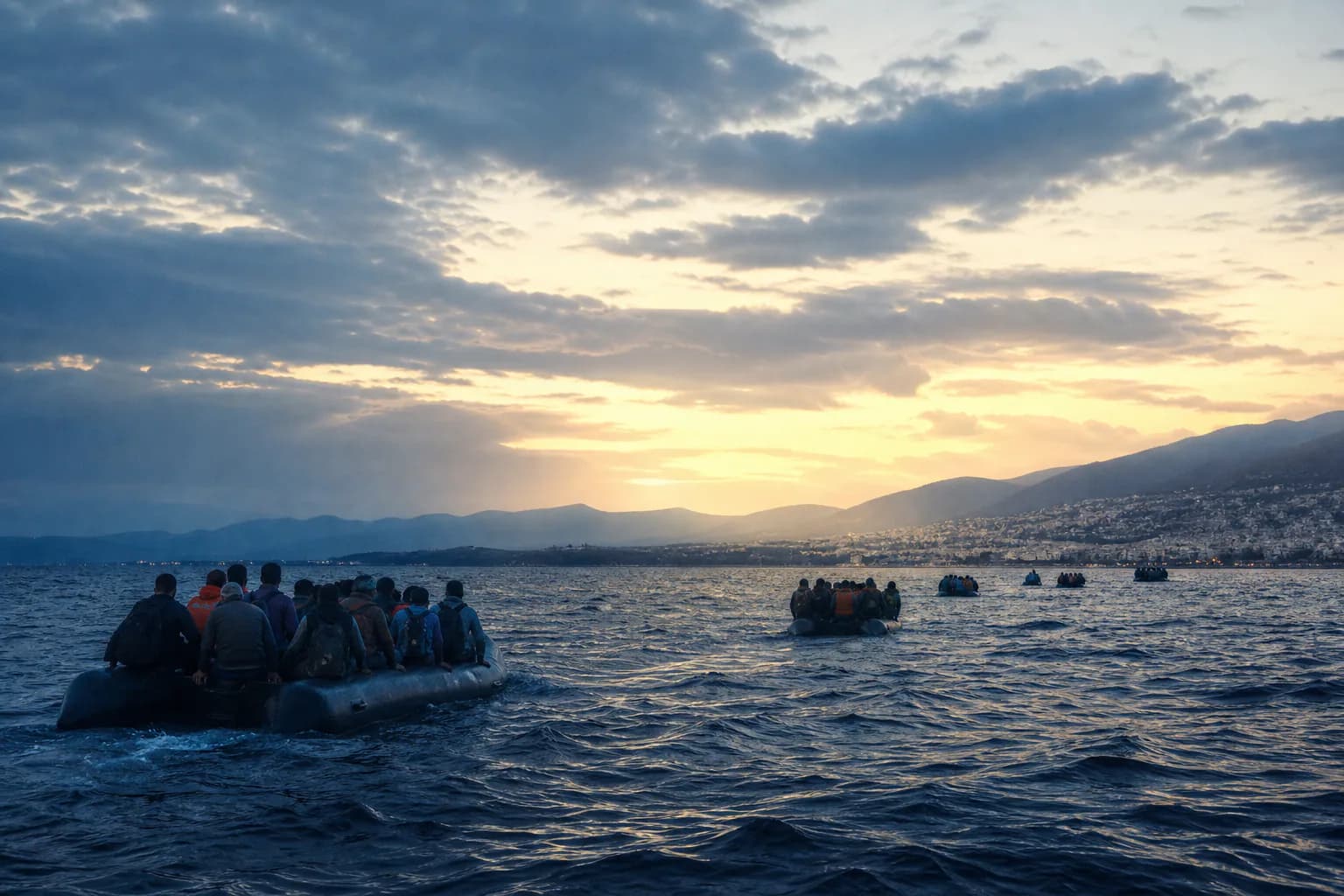
In 2015, more than one million people crossed into Europe seeking asylum, most fleeing Syria's civil war along with conflicts in Afghanistan and Iraq, arriving primarily by boat across the Mediterranean and on foot through the Balkans via what became known as the Balkan route. The crisis crystallized publicly in September, when a photograph of three-year-old Alan Kurdi's body on a Turkish beach circulated worldwide after his family's boat capsized attempting the short crossing to the Greek island of Kos.
Germany's chancellor Angela Merkel responded by effectively suspending the EU's Dublin Regulation, which normally required asylum seekers to register and claim asylum in their first country of entry, and declared "wir schaffen das" — we will manage this — opening Germany's borders to what became roughly 890,000 arrivals that year, the largest single-country intake in Europe's modern history. The decision bypassed the EU's existing framework rather than reforming it, leaving the underlying registration and burden-sharing system unchanged even as it absorbed unprecedented volume.
Frontline states Greece and Italy, lacking the processing capacity for that volume — Greece alone received over 850,000 sea arrivals in 2015 — became transit corridors rather than destinations, while Hungary under Viktor Orbán built razor-wire border fences along its Serbian and Croatian borders, and other Eastern European states refused EU-mandated relocation quotas outright, revealing how little consensus existed beneath the bloc's shared asylum rhetoric.
Syrian and Afghan refugees gained safety but often years of legal limbo; many spent two to three years in asylum backlogs before status was resolved, delaying family reunification and labor-market integration. Merkel's political capital, initially bolstered by welcoming coverage and volunteer "Willkommenskultur" scenes at train stations, eroded steadily as integration strains, a New Year's Eve 2015-16 mass assault case in Cologne linked to migrants, and 2016 terror attacks in Berlin and elsewhere fed a nationalist backlash.
The far-right Alternative for Germany party, polling near single digits before 2015, became the country's third-largest party by the 2017 federal election, entering the Bundestag for the first time with 12.6 percent of the vote — a direct electoral legacy of the crisis's political fallout that has only grown since.
Coverage initially emphasized humanitarian crisis framing centered on individual stories like Kurdi's, and underweighted the coming political realignment: commentators largely missed how durably the crisis would reshape party systems well beyond Germany, feeding Brexit's Leave campaign messaging on immigration control and boosting nationalist parties from France's National Rally to Sweden Democrats.
The EU-Turkey deal of March 2016, under which Turkey agreed to stem crossings and accept returned migrants in exchange for €6 billion in aid and visa concessions for Turkish citizens, sharply reduced Aegean crossings within months and became the template the EU still relies on: outsourcing border enforcement to transit countries rather than reforming internal asylum processing capacity.
That outsourcing model, and the border infrastructure built around it — Frontex's budget growing from roughly €140 million in 2015 to over €900 million by the 2020s, biometric registration systems, and externalized migration-control deals with Libya and Tunisia — remains Europe's default response to migration pressure a decade later, alongside a nationalist political current that 2015 accelerated rather than created.
Aegean crossings, Balkan routes, and German suspension of Dublin returns for Syrians made 2015 a demographic and political shock. Frontex, NGO rescue ships, and smuggling markets formed a grim logistics system. Images of drowned children briefly shifted empathy before backlash hardened.
Far-right parties capitalized; mainstream coalitions fractured over quotas and border fences. EU-Turkey deals and later Mediterranean externalization strategies tried to move the crisis offshore. Asylum law remains the union's unfinished sovereignty question — human rights commitments versus capacity politics.
Municipalities that housed arrivals became laboratories of integration success and backlash. EU solidarity mechanisms strained against national vetoes. Migration remains the issue where European values and European capacity most publicly fail to rhyme.
Local mayors became foreign-policy actors overnight. Asylum backlogs turned legal rights into waiting rooms. Europe’s external border deals still trade money and visas for reduced arrivals — the 2015 template in softer language.
The crisis also permanently altered how the EU debates burden-sharing: proposals for mandatory relocation quotas resurfaced repeatedly through the 2020 New Pact on Migration and Asylum negotiations, consistently running into the same Eastern European resistance first hardened in 2015, so that a decade of subsequent reform effort has still not produced a shared system capable of absorbing a comparable surge without similar strain.
Century Signals note: UNHCR and IOM flow data; EU Council conclusions 2015–2016; contemporaneous European reporting. Editorial judgment about what still structures the present — not a comprehensive history.