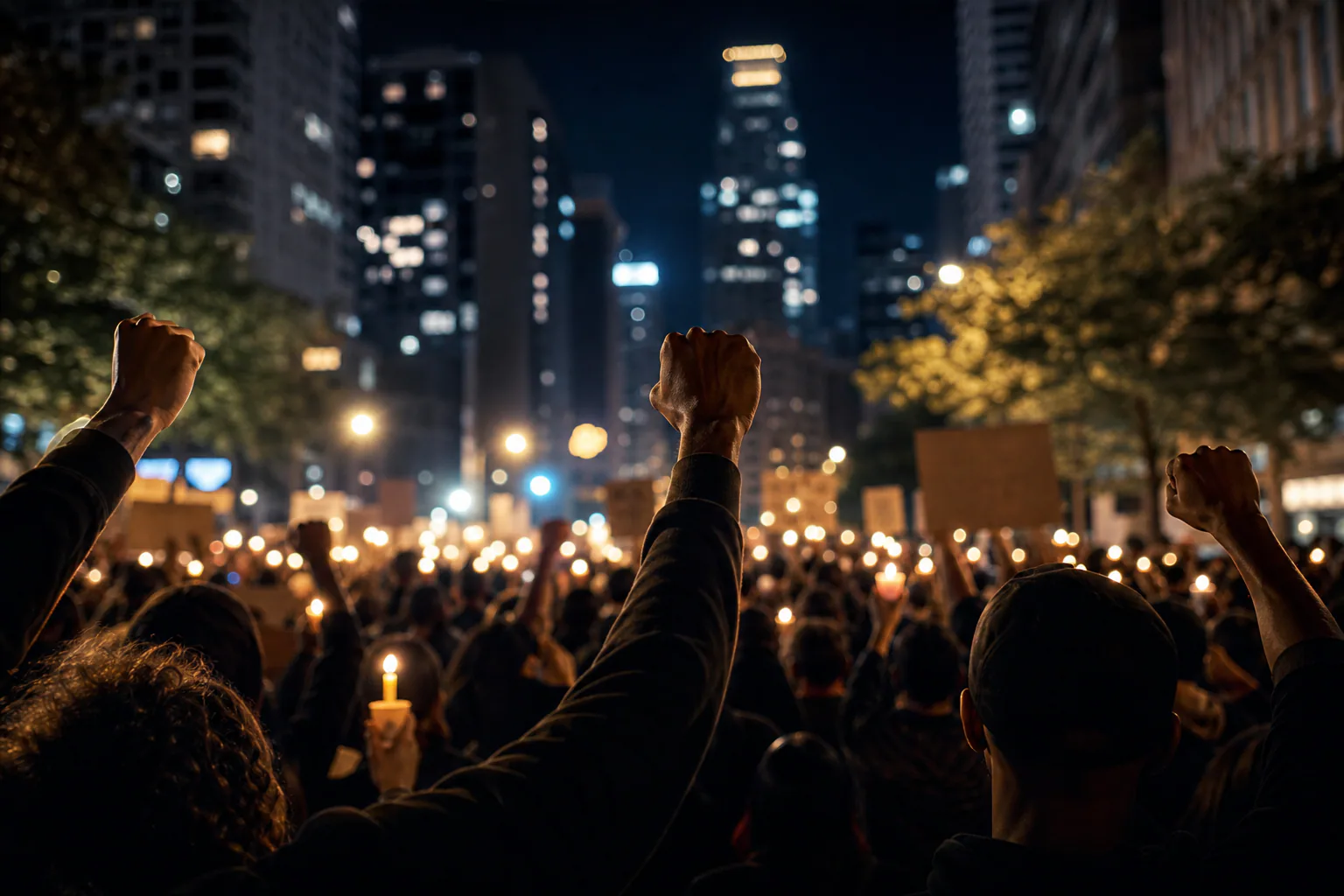
On May 25, 2020, Minneapolis police officer Derek Chauvin knelt on George Floyd's neck for approximately nine minutes and twenty-nine seconds during an arrest over an alleged counterfeit $20 bill, while Floyd repeatedly said he could not breathe and called out for his deceased mother. Seventeen-year-old bystander Darnella Frazier recorded the encounter on her phone; the footage, posted to Facebook within hours, spread globally within a day and became the primary evidence in Chauvin's subsequent prosecution, with Frazier later receiving a Pulitzer Prize special citation for capturing it.
Protests began in Minneapolis within a day and spread to all 50 U.S. states and more than 60 countries within two weeks, with researchers at Harvard and other institutions later estimating that between 15 and 26 million people participated in U.S. demonstrations over the summer of 2020, making it, by some measures, the largest protest movement in American history, surpassing the scale of civil rights-era demonstrations of the 1960s.
The movement's organizing infrastructure built on groundwork laid since Black Lives Matter's 2013 founding by Alicia Garza, Patrisse Cullors, and Opal Tometi after George Zimmerman's acquittal in Trayvon Martin's death, and its 2014 growth following the killing of Michael Brown in Ferguson, Missouri — this time amplified by ubiquitous smartphone cameras, a pandemic that had already concentrated public attention at home with historically high unemployment, and a video whose nine-minute length and clarity left little ambiguity for viewers in a way shorter, more contested footage from earlier cases had not.
Chauvin was convicted of second-degree unintentional murder, third-degree murder, and second-degree manslaughter in April 2021 and sentenced to 22.5 years, later pleading guilty to separate federal civil rights charges; three other officers present were later convicted on related federal and state charges for failing to intervene. Numerous cities reduced or reallocated police budgets amid "defund the police" debates, with Minneapolis cutting its police budget by roughly $8 million in late 2020, though most large cities restored or increased police funding within a few years as crime concerns resurfaced in 2021 and 2022. Minneapolis voters themselves rejected a November 2021 ballot measure that would have replaced its police department with a new public safety agency.
Coverage at the time captured the scale of the protests vividly but underweighted how contested and short-lived some of the immediate policy responses would prove; corporate diversity pledges — totaling an estimated $50 billion in corporate commitments announced in 2020 alone — and police-reform proposals saw substantially reduced follow-through within a few years, a gap between symbolic commitment and durable institutional change that researchers and journalists documented extensively afterward.
Federal policing reform legislation, the George Floyd Justice in Policing Act, passed the House in 2021 but failed to overcome a Senate filibuster after bipartisan negotiations collapsed in 2021, leaving most substantive reform to happen unevenly at the state and municipal level — some states banned chokeholds and no-knock warrants, others made no changes at all, producing a patchwork rather than a national standard.
The Minneapolis Police Department itself entered a court-enforceable consent decree with the state of Minnesota in 2023 and a separate agreement with the Department of Justice, mandating specific use-of-force and accountability reforms subject to independent monitoring — one of the more durable direct institutional consequences to emerge from the case, though implementation has proceeded slowly.
The video of George Floyd's murder catalyzed the largest protest wave in a generation across U.S. cities and abroad. Corporate statements, book lists, and police-budget fights followed with uneven durability. Statues and school curricula became secondary battlegrounds.
Crime-rate politics and prosecutorial reforms produced backlash cycles that reshaped 2021–2022 elections. Body cameras and use-of-force policies advanced in some jurisdictions; trust gaps persisted. The mechanism was viral evidence meeting organized movement capacity — a template for future accountability crises.
Corporate DEI budgets rose then faced political backlash — a boom-bust of institutional fashion around a still-unresolved policing problem. Families of victims continued litigation after hashtags moved on. Viral justice can open doors; statutes and street practice decide whether they stay open.
The lasting infrastructure is less legislative than cultural and technological: body camera adoption expanded further, bystander video remains the default evidentiary check on police conduct claims, and corporate and institutional diversity, equity, and inclusion programs expanded rapidly after 2020 before facing significant political and legal rollback later in the decade — a reversal that itself became a defining feature of the following years' politics.
Century Signals note: Court records in the Chauvin case; contemporaneous protest reporting; later policing-reform and electoral analyses. Editorial judgment about what still structures the present — not a comprehensive history.