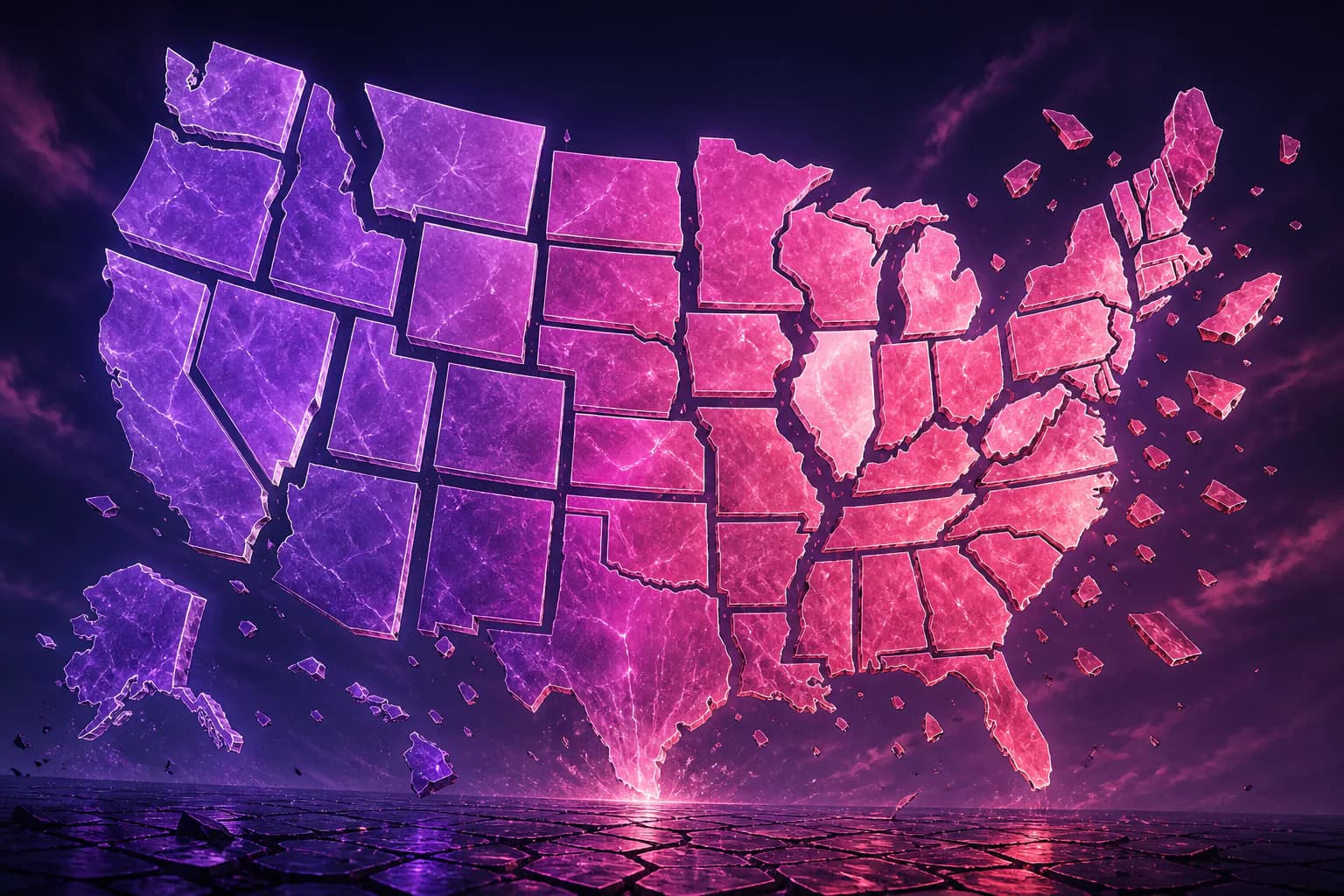
The Supreme Court ruled in Dobbs v. Jackson Women's Health Organization on June 24, 2022, overturning both Roe v. Wade (1973) and Planned Parenthood v. Casey (1992) and eliminating the federal constitutional right to abortion that had stood for nearly fifty years. The ruling was not a surprise by the time it landed: Politico had published a leaked draft opinion authored by Justice Samuel Alito in May 2022, an unprecedented breach that gave both sides weeks to prepare responses before the official ruling.
The mechanism Dobbs activated was jurisdictional rather than substantive — it did not ban abortion but returned regulatory authority entirely to states, and roughly a dozen states with 'trigger laws' passed in anticipation of Roe's reversal imposed near-total bans within days or weeks of the ruling. States split sharply: some, including Texas and several in the Deep South and Midwest, enacted bans with narrow or no exceptions, while others, including California and New York, moved to codify abortion protections and fund provider capacity for out-of-state patients.
Clinics in banned states closed or relocated across state lines almost immediately, and interstate travel for abortion care became a measurable, tracked phenomenon: research groups including the Guttmacher Institute documented tens of thousands of patients crossing state lines annually in the years following Dobbs, concentrated in border states like Illinois, Kansas, and New Mexico that saw provider capacity strain from out-of-state demand. Medication abortion, using mifepristone, became a parallel battleground, with litigation reaching the Supreme Court again in 2024 over FDA approval procedures.
Corporations including Amazon, Disney, Citigroup, and Microsoft announced policies covering travel expenses for employees seeking abortion care unavailable in their home states, converting employer benefits into a substitute for geographic access — a shift that disproportionately helped workers at large firms with such benefits and left lower-wage workers in restrictive states with the least practical recourse. Physicians in ban states reported delaying care for miscarriage and other pregnancy complications out of fear of prosecution under ambiguously worded statutes.
Coverage in the days after the ruling concentrated heavily on protests and the leaked-draft scandal itself. It underweighted the immediate electoral test that followed: in August 2022, Kansas voters rejected a constitutional amendment that would have removed abortion protections, by a wide margin in a red state, an early signal — largely treated as a local curiosity at the time — that abortion rights would become a mobilizing issue in the 2022 midterms and beyond.
Insurance and employment law also absorbed new complexity: states with bans faced questions over whether employer-provided travel benefits for abortion care could expose companies to civil liability under laws like Texas's private-enforcement statute, which allowed private citizens rather than state officials to sue those who 'aid or abet' an abortion, an enforcement design later copied in other states' restrictions on additional issues.
Abortion-related ballot measures have appeared in state after state since 2022, passing in several including Ohio, Michigan, and Vermont, and losing narrowly elsewhere, making direct democracy rather than legislatures the primary mechanism through which many states have actually settled the question. The patchwork Dobbs created — near-total bans bordering states with expanded access — has become a stable, if strained, feature of American healthcare geography rather than a transitional state.
Dobbs v. Jackson Women's Health Organization overturned Roe and Casey, returning abortion regulation to the states. Trigger laws activated; clinic maps rewrote overnight; interstate travel and medication abortion became legal gray zones fought in courts and ballot measures.
Electoral politics absorbed a new mobilization axis that cut across prior coalitions. Employers and universities drafted travel policies; data-privacy fears around period apps entered security advice. Constitutional privacy doctrine's retreat reopened adjacent rights arguments still in motion.
Medical training programs rewrote curricula around state lines. Pregnancy became a jurisdictional condition in ways younger cohorts had been told were settled. Constitutional politics returned to the body with electoral consequences still unfolding cycle by cycle.
The decision's deeper inheritance is doctrinal: Dobbs' reasoning, which grounded constitutional rights in whether they are 'deeply rooted in this Nation's history and tradition,' has since been cited in litigation touching contraception access, same-sex marriage, and other substantive due process precedents, keeping the ruling's logic — not just its immediate subject — at the center of ongoing constitutional argument.
Century Signals note: Supreme Court Dobbs opinion; state trigger-law trackers; contemporaneous legal and electoral reporting. Editorial judgment about what still structures the present — not a comprehensive history.