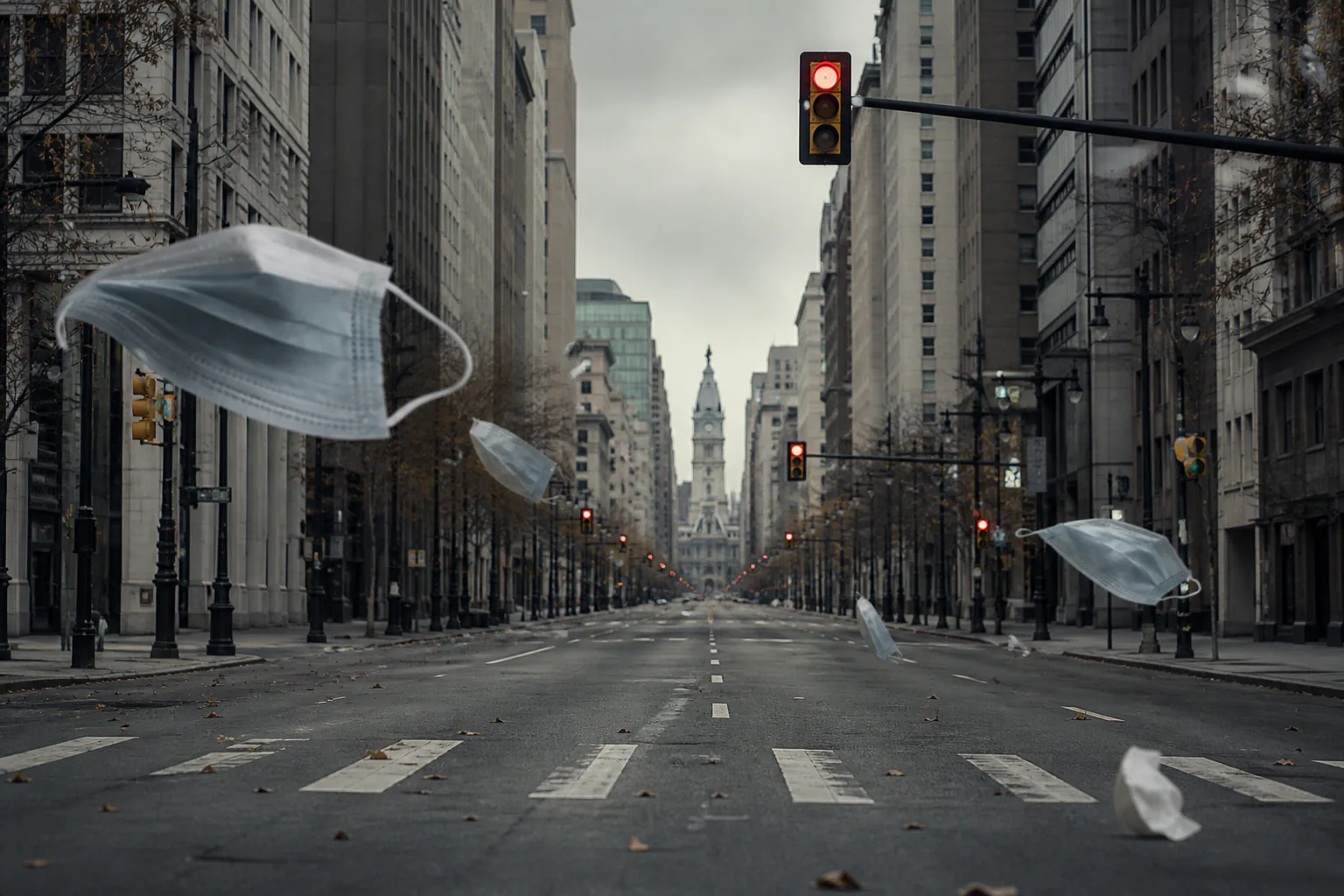
Chinese authorities reported a cluster of pneumonia cases of unknown origin in Wuhan to the World Health Organization on December 31, 2019, later identified as a novel coronavirus, SARS-CoV-2, whose genetic sequence was published publicly on January 11, 2020. The WHO declared a Public Health Emergency of International Concern on January 30, 2020, and a global pandemic on March 11, 2020, by which point the virus had reached more than 100 countries and confirmed cases exceeded 118,000 worldwide.
Governments' response infrastructure varied sharply but converged on the same basic tools: China imposed the first large-scale lockdown, sealing Wuhan's roughly 11 million residents in place on January 23, 2020, a measure many Western governments initially called extreme and impractical for their own populations; Italy became the first Western country to lock down nationally on March 9, after its hospital system in Lombardy neared collapse; and within weeks, roughly half the world's population was under some form of stay-at-home order, an unprecedented simultaneous restriction on movement never before attempted at that scale.
Testing capacity, personal protective equipment supply chains, and hospital ICU bed availability all became binding constraints almost overnight, exposing how thinly globalized just-in-time manufacturing had left many countries' stockpiles of even basic medical supplies like N95 masks and surgical gowns, a large share of which were produced in China and briefly restricted from export during the country's own initial outbreak response.
Healthcare workers and elderly populations, particularly in long-term care facilities where outbreaks proved devastating in the U.S., UK, and much of Europe, bore the heaviest direct mortality; the WHO's later excess-mortality estimate placed the global pandemic death toll around 14.9 million by the end of 2021, several times higher than initially confirmed case-fatality counts of roughly 5.4 million reported deaths over the same period. Lower-wage service and frontline workers who could not work remotely bore disproportionate infection risk, while white-collar knowledge workers shifted to remote work in a matter of days, an inequality the pandemic made newly visible across many economies at once.
Coverage in early 2020 fluctuated between underweighting the virus's severity — some outlets and officials, including U.S. surgeon general guidance in February 2020, initially discouraged mask-wearing by the general public — and later overweighting single interventions like surface disinfection relative to airborne transmission risk, a scientific understanding that evolved substantially over the pandemic's first year and left public messaging visibly inconsistent in ways that fed lasting public distrust of health authorities.
The compressed vaccine timeline was the clearest positive infrastructure story: Operation Warp Speed, backed by roughly $10 billion in U.S. federal funding, and equivalent programs elsewhere funded parallel manufacturing at financial risk before trials concluded, enabling Pfizer-BioNTech and Moderna's mRNA vaccines to reach emergency authorization within about eleven months of the virus's genetic sequence being published — compared to the four to fifteen years vaccine development had typically taken previously, with the mumps vaccine's four-year timeline in the 1960s previously standing as the fastest on record.
Global economic output contracted by an estimated 3.1 percent in 2020 according to the IMF, the sharpest global recession since World War II, while government stimulus and relief spending worldwide exceeded $14 trillion, reshaping fiscal policy debates and contributing to the inflation surge that followed in 2021 and 2022 as demand rebounded faster than constrained supply chains could accommodate.
Wuhan's early cluster became a planetary shock: lockdowns, PPE scarcity, ventilator triage debates, and excess-mortality dashboards. Supply chains for everything from semiconductors to toilet paper revealed just-in-time fragility. Schools, churches, and offices learned which functions were 'essential' by emergency decree.
mRNA vaccines arrived with historic speed; inequitable distribution and misinformation wars paralleled the science. Debt-financed fiscal support prevented deeper collapse while inflating later macro debates. COVID's mechanism is synchronized global interruption — a rehearsal for the next pathogen or systemic shock.
Long COVID, learning loss, and trust fractures are the slow disasters inside the acute one. Scientific institutions gained heroic chapters and credibility wounds in the same years. Future preparedness will be judged against whether societies stored those lessons or memory-holed them.
The pandemic's institutional inheritance is still being negotiated: permanent shifts toward hybrid work, expanded telehealth regulation, mRNA platform investment for future pathogens, and a more polarized relationship between public health authorities and segments of the public who grew skeptical of shifting guidance all trace directly back to decisions made in those first chaotic months of 2020.
Century Signals note: WHO chronologies and IHR materials; national public-health data; contemporaneous pandemic reporting and economic analyses. Editorial judgment about what still structures the present — not a comprehensive history.