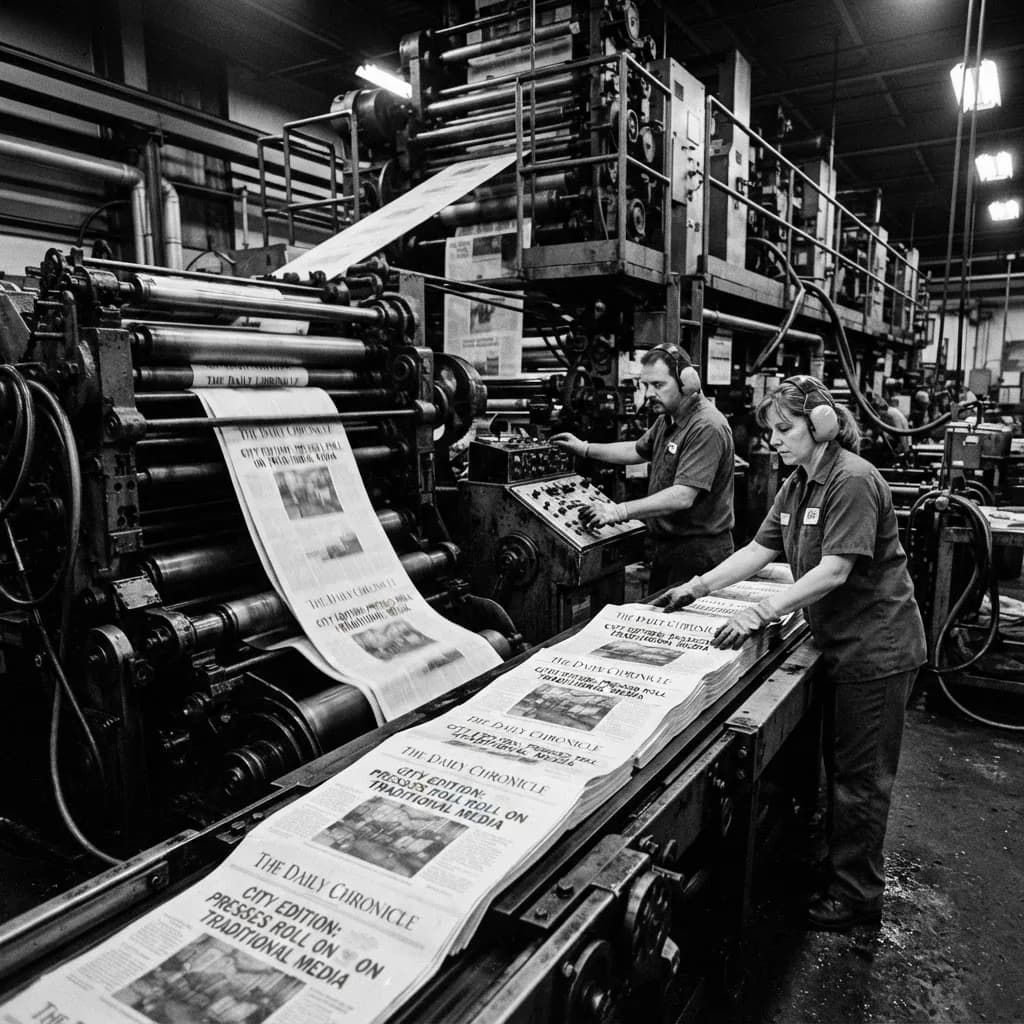
The Associated Press has used automated software to write corporate earnings stories since 2014, and nobody found that controversial because the form was narrow and the facts were structured: revenue, EPS, guidance, in a template a machine could fill reliably. What is different now is that a single writer can produce a dozen competent full drafts of an open-ended memo, article, or proposal before lunch, each grammatically sound and each free to say almost anything — a different order of problem than filling in an earnings template.
For most of the history of editing, scarcity did some of the editor's work for them. A limited number of writers produced a limited number of drafts, and an editor's job was substantially about triage — deciding which of a small set of options to run, fix, or kill. The Washington Post's Heliograf, which has generated short election and sports recaps since 2016, never threatened that arrangement, because it operated inside guardrails a human had already set. What threatens it now is volume without guardrails.
What remains, once volume stops being a constraint, is judgment in something closer to its pure form: the ability to tell a draft that sounds right from one that is right, to notice when fluent prose is concealing a missing argument, and to know which of ten adequate framings is the one worth publishing.
This changes who is valuable in a newsroom. The junior role that used to exist to produce competent first drafts under supervision is thinning out, because the drafts are now free and the supervision is the scarce part. That is a genuine loss for how editors used to be trained, not just a change in headcount — nobody learns judgment only by having it explained to them.
Newsrooms that treat this moment as a cost-cutting opportunity — swapping junior staff for generation tools and calling the editor's job unchanged — are making a category error, and it is one with a deadline: the publications that under-invest in that absorbed judgment now will not be able to hire their way back to it once the junior pipeline that used to train it is gone.