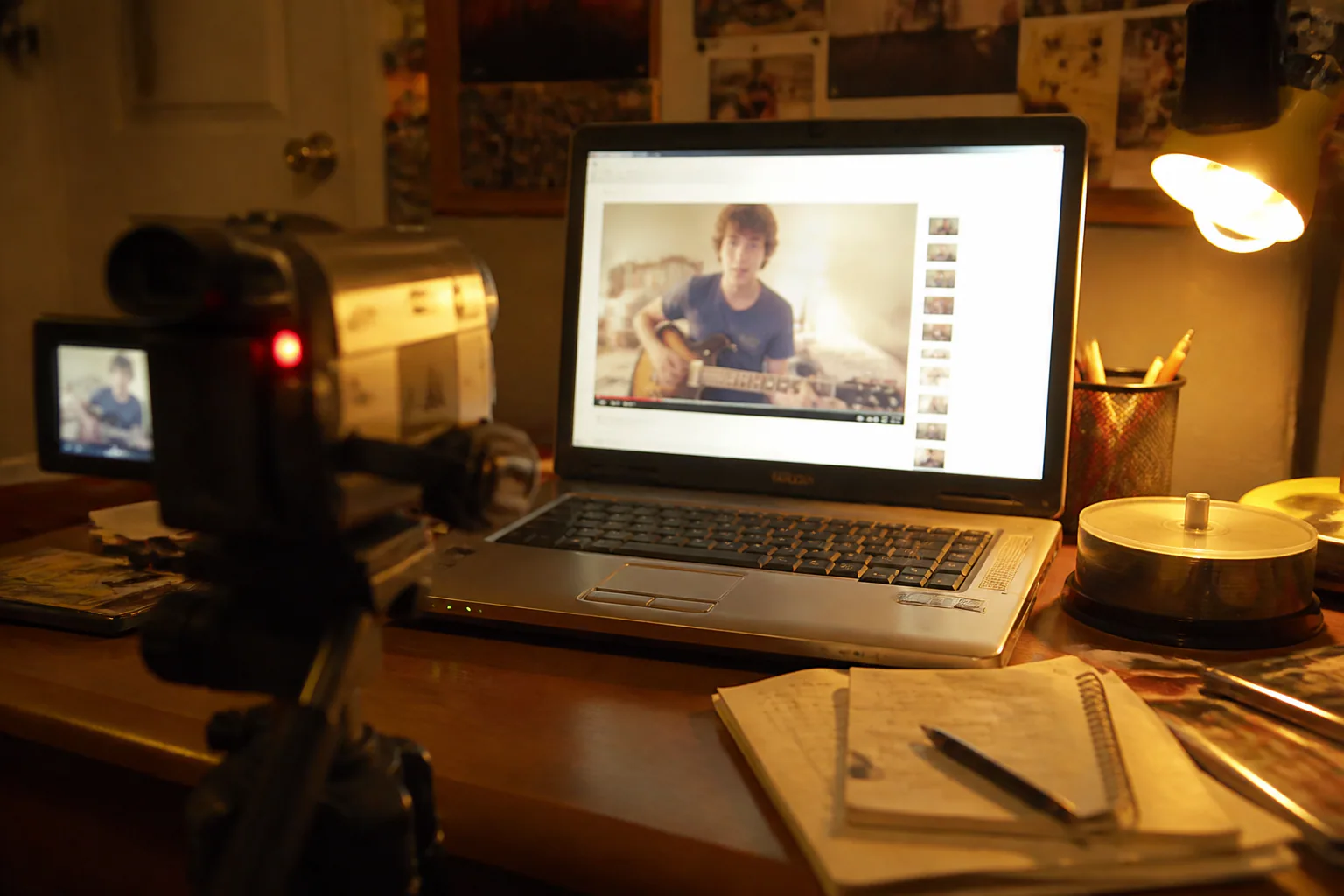
Chad Hurley, Steve Chen, and Jawed Karim, three former PayPal employees who met while working together at the payments company, founded YouTube in February 2005; Karim personally uploaded the platform's very first video, an 18-second clip titled 'Me at the zoo,' that April, and the site's uploads grew to roughly 65,000 per day by the end of 2006, a growth curve that startled even its founders.
The mechanism was intermediation without gatekeeping: no broadcast license required, no cable-carriage negotiation with distributors, just a simple upload button and a shareable link that could be embedded on any blog or online forum. View counts and public comments created a feedback loop that consistently rewarded novelty, controversy, and speed of publication over traditional production value or editorial vetting.
Google acquired the still-unprofitable company in October 2006 for $1.65 billion in stock, a price many financial commentators at the time called reckless for a site running largely on unlicensed, frequently pirated content and facing serious legal exposure, including Viacom's $1 billion copyright infringement lawsuit filed in 2007 and not fully settled until 2014.
YouTube's founders and early investors gained a landmark, highly lucrative exit; traditional broadcasters and cable television networks gained a slow-motion competitor for viewer attention that eventually became genuinely existential to their business models. A new class of independent creators — from early amateur vloggers to, by the 2010s, full-time YouTube-based businesses supported by the Partner Program launched in 2007 — gained a distribution channel that required no traditional studio deal or network approval whatsoever.
Entertainment press coverage in 2005 and 2006 treated YouTube largely as a passing fad or simply a copyright-infringement magnet for lawsuits. Substantially underweighted was how training billions of ordinary people to default to watching nonprofessional video content would eventually reshape breaking-news distribution, political campaign strategy, and children's media consumption habits worldwide.
TikTok's short-form vertical-video format, Twitch's live-streaming business model, and every platform now organized explicitly around a 'creator economy' assume YouTube's original foundational bet: that video is simply abundant speech, moderated by a private recommendation algorithm rather than by any traditional broadcast license or editorial gatekeeper.
YouTube launched in 2005 and was acquired by Google in 2006 for $1.65 billion in stock. The product insight was ruthless simplicity: anyone could upload, anyone could watch, and a URL made video as shareable as a webpage. Broadcast scarcity collapsed into infinite amateur and professional supply.
Monetization via ads, then the Partner Program, turned bedrooms into media businesses and forced legacy networks to treat the platform as both rival and distributor. Content-moderation crises, copyright Content ID, and recommendation-algorithm politics all stem from the same decision: first maximize upload and watch time, then retrofit governance onto a firehose.
Advertisers initially hesitated beside unpredictable user content; Google's brand and later ad tech closed that gap. The bargain — free hosting funded by attention auctions — now underwrites everything from music discovery to children's entertainment, with recurring moral panics built into the business model.
By the 2010s, YouTube was simultaneously a search engine rival, a music industry distributor, a children's content hazard, and a political advertising surface. Few products absorb that many societal roles without becoming a standing regulatory target — which is exactly what happened across copyright, safety, and election-integrity debates.
Early YouTube ran on the slogan 'Broadcast Yourself' while fighting bandwidth costs and copyright strikes from TV networks and music labels. Google's acquisition supplied capital and, eventually, Content ID — an industrial copyright machine that made rights-holders partners in monetization rather than only plaintiffs.
Recommendation systems optimized for watch time turned the site into a discovery engine more powerful than many cable schedules. Creators built middle-class businesses; children absorbed algorithmic culture; extremism researchers documented radicalization pathways. Few platforms host that many societal arguments inside one player window.
Local TV lost younger viewers not to a rival channel but to a search-and-recommend machine that never signed off. Politicians learned to speak in thumbnails; educators learned to compete with gaming commentary. The platform’s civic weight arrived before its civic design.
Broadcast television never regained the effective near-monopoly on moving images it held before 2005; YouTube's recommendation algorithm, not any single network programming executive, now quietly decides what a meaningful share of the entire world watches next on any given day.
Century Signals note: Google acquisition coverage (2006); reporting on Content ID and Partner Program; later research and journalism on recommendation systems and creator economies. Editorial judgment about what still structures the present — not a comprehensive history.