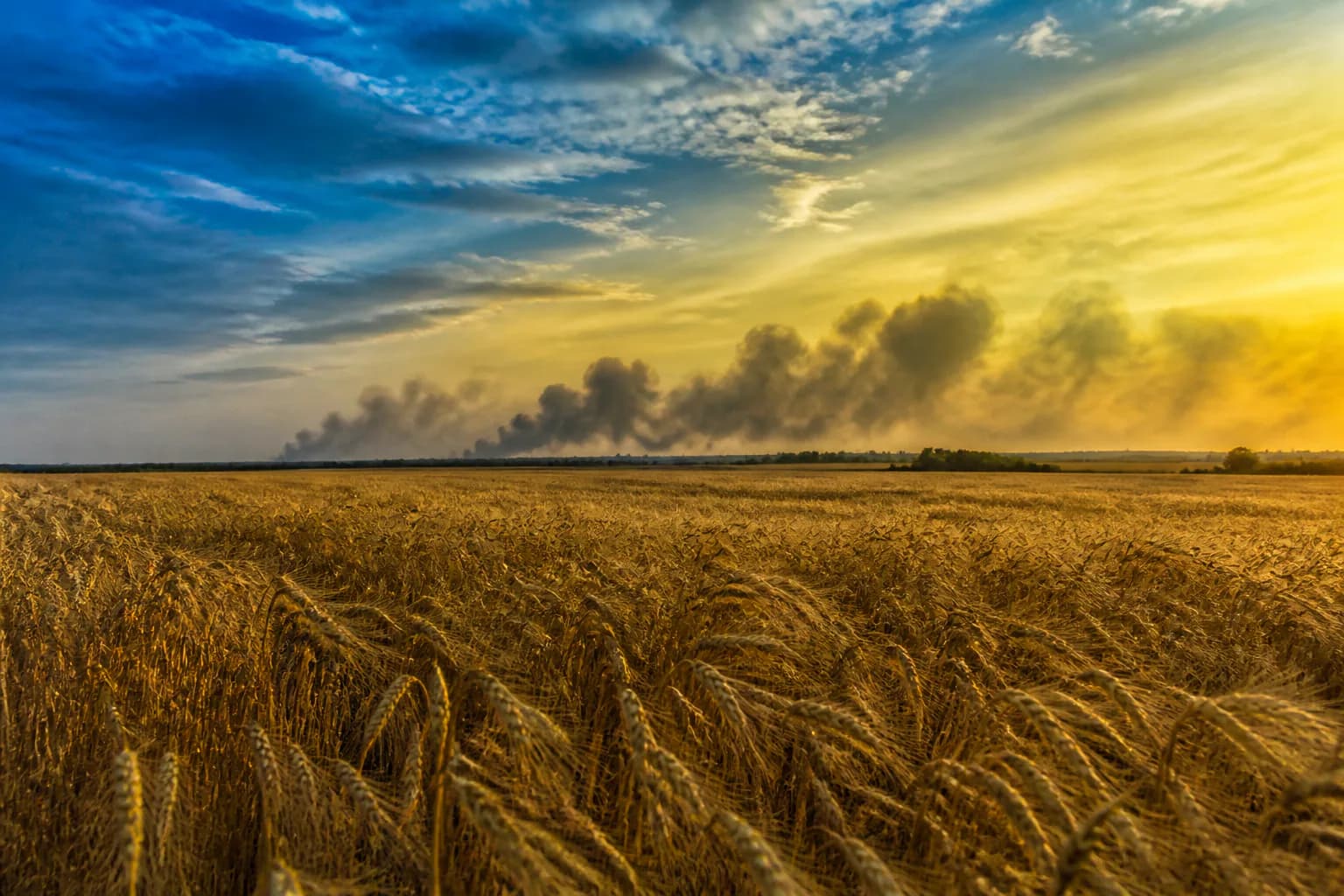
Russian forces invaded Ukraine on February 24, 2022, launching the largest conventional war in Europe since 1945, after months of troop buildup that Western intelligence agencies had publicly warned about in advance — an unusual disclosure choice that itself became part of the story, as the U.S. and U.K. released assessments in real time to counter Russian denials. Kyiv did not fall in the days Russian planners reportedly expected; Ukrainian resistance, aided by rapid Western weapons shipments, held the capital and pushed Russian forces back from northern Ukraine by April.
The mechanism with the deepest reach was energy. Germany had built its economic model partly on cheap Russian pipeline gas, including the Nord Stream 2 pipeline completed in 2021 but never certified for operation after the invasion. Sabotage explosions destroyed sections of the Nord Stream 1 and 2 pipelines in September 2022, and Europe spent the following winter racing to secure liquefied natural gas from the U.S., Qatar, and elsewhere while drawing down storage and cutting consumption to avoid shortages.
Financially, the U.S. and allies cut major Russian banks off from the SWIFT international payment system and froze roughly $300 billion in Russian central bank reserves held abroad, an unprecedented move against a G20 economy's foreign reserves. NATO, which Russia's invasion was partly justified as resisting, expanded instead: Finland joined in April 2023 and Sweden in March 2024, ending decades of official nonalignment and roughly doubling NATO's border with Russia.
Ukraine's civilian population absorbed the direct cost: more than six million people fled the country in the war's first months, among the fastest refugee movements in postwar European history, while millions more were internally displaced. Evidence of mass killings of civilians in Bucha, revealed when Russian forces withdrew from the town in April 2022, hardened Western resolve and led to a March 2023 International Criminal Court arrest warrant for Vladimir Putin over the unlawful deportation of Ukrainian children.
Early coverage overweighted predictions of rapid Russian victory or rapid Russian collapse, both of which proved wrong as the war settled into a grinding, artillery-heavy conflict along a roughly stable front line. It underweighted the slower story of Western industrial capacity: how quickly the U.S. and European arms industries could actually replace expended artillery shells and air defense interceptors, a production question that shaped battlefield outcomes more than any single battle.
Global food and fertilizer markets absorbed a secondary shock: Ukraine and Russia together had supplied close to a third of world wheat exports before the war, and grain shipments disrupted by the Black Sea blockade drove price spikes that hit import-dependent countries in the Middle East and Africa hardest, well before the July 2022 grain corridor deal partially eased shipments.
The war's present inheritance runs through European energy policy, which pivoted hard toward LNG terminals, renewable buildout, and diversified suppliers in a way that will outlast the conflict itself; Germany's strategic reassessment, including a defense spending increase (the Zeitenwende) that ended decades of postwar military restraint, reshaped one of Europe's most cautious defense postures within a single year.
Russia's full-scale invasion in February 2022 returned industrial war to Europe: artillery attrition, energy coercion, and nuclear saber-rattling. Western sanctions, SWIFT removals for selected banks, and arms pipelines remade alliance practice. Ukraine's resistance and information campaign kept the war on front pages for years.
Food-price shocks, refugee millions, and defense-budget reversals in Germany and elsewhere showed second-order global effects. Territorial control oscillated; the strategic fact did not: borders in Europe can again be rewritten by force. Deterrence theory left the seminar room.
Defense industries rediscovered artillery economics; civilians rediscovered blackouts as weapons. Neutrality debates in distant capitals became less abstract. The war’s mechanism is demonstrating that industrial capacity and alliance cohesion are strategy — not footnotes to precision munitions.
NATO's enlargement and the sanctions architecture built against Russia — export controls on dual-use technology, frozen central bank assets, secondary sanctions on third countries facilitating evasion — now serve as the template regularly invoked in discussions of how the West might respond to other state aggression, including hypothetical scenarios involving Taiwan. The Black Sea Grain Initiative, negotiated in July 2022 to unblock Ukrainian grain exports, also established a precedent for humanitarian carve-outs inside active wars, even after Russia withdrew from the deal in 2023.
Century Signals note: UNGA votes and IAEA nuclear-safety reporting; contemporaneous war correspondence; sanctions and energy-market analyses. Editorial judgment about what still structures the present — not a comprehensive history.