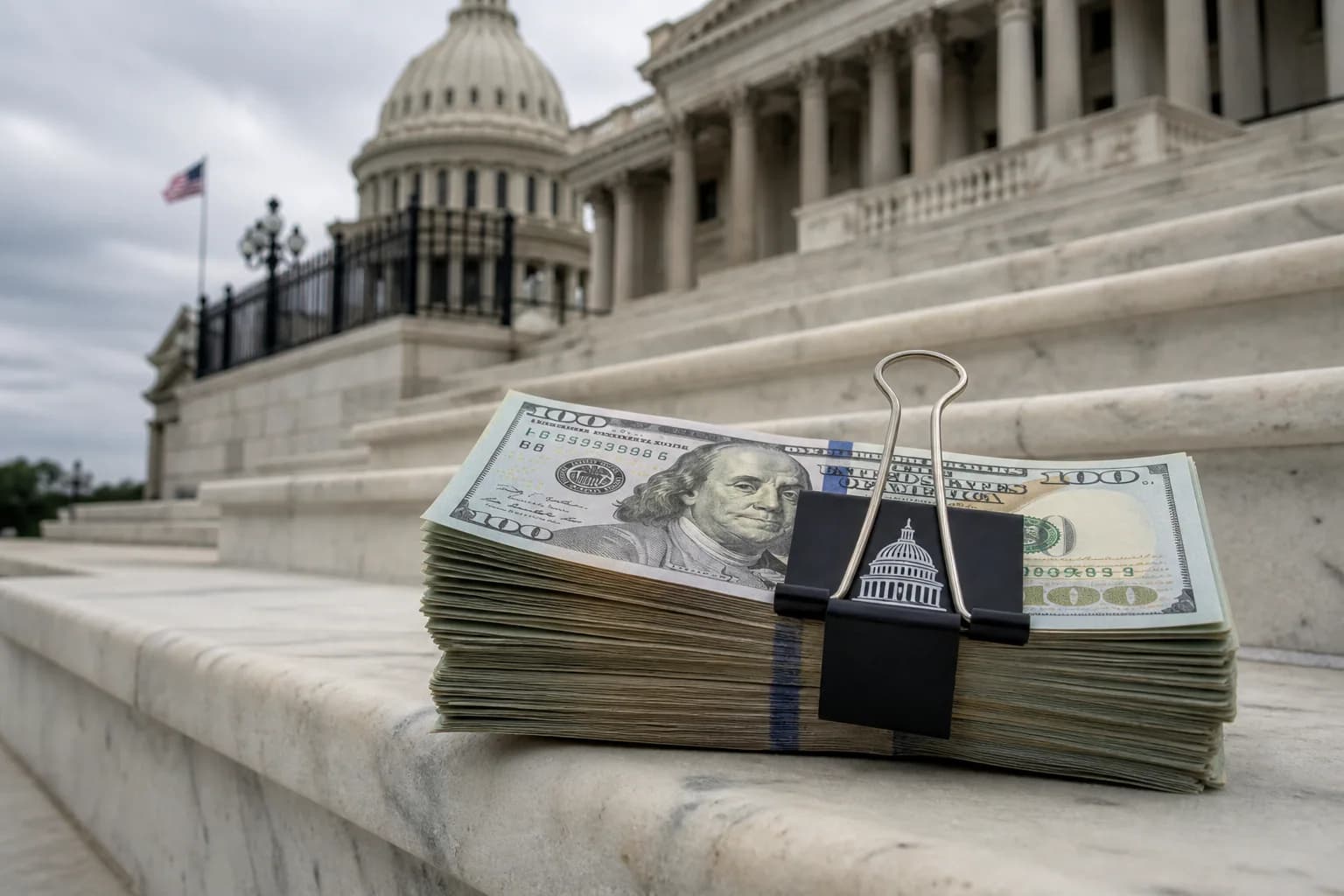
On October 3, 2008, President Bush signed the Emergency Economic Stabilization Act, authorizing $700 billion for the Troubled Asset Relief Program — passed by Congress only after an initial version failed in the House and the stock market fell nearly 780 points in response, the largest single-day point drop to that date.
TARP's original design — the Treasury buying toxic mortgage assets directly from banks — proved too slow and too hard to price; within weeks, Treasury Secretary Hank Paulson pivoted to direct capital injections, buying preferred stock in the nation's largest banks, whether they said they needed it or not, to avoid singling out the weakest and triggering the exact run officials were trying to prevent.
The mechanism was conditional liquidity dressed as equity: the government became a shareholder and guarantor across banking, and later auto manufacturing through the separate rescue of GM and Chrysler, socializing the downside long enough for private earnings to rebuild capital ratios and eventually repurchase the government's stake.
Banks like Goldman Sachs and Citigroup received tens of billions and repaid with interest within a few years; AIG's rescue, financed partly through TARP and partly through separate Federal Reserve lending, eventually totaled roughly $182 billion. Executives retained bonuses that provoked congressional hearings and public fury even as the program, on Treasury's own later accounting, recovered most of its principal — an outcome contradicted by the political memory of “bailing out the banks.”
The clearest flashpoint came in March 2009, when news broke that AIG's Financial Products division — the unit whose credit-default-swap bets had triggered its collapse — had paid roughly $165 million in retention bonuses using taxpayer funds. Congress responded within days with a bill to tax the bonuses at 90 percent, which stalled in the Senate, but the episode fixed in public memory an image of rescued executives rewarded for the very risk-taking that caused the crisis, regardless of the technical distinction between the bonus contracts and the bailout itself.
A separate $80.7 billion tranche funded the auto industry, steering General Motors and Chrysler through structured bankruptcies rather than liquidation; GM's Section 363 sale let a “new GM” emerge within weeks carrying far less legacy debt, while the government's roughly 61 percent equity stake was gradually sold off through 2013, ultimately recovering most, but not all, of the auto rescue's principal.
Coverage concentrated on taxpayer cost estimates that swung wildly and on executive-bonus optics, which made for better television than the more consequential story: that future crises would now assume rapid, large-scale fiscal and monetary rescue as the default response, reshaping both financial-industry risk-taking and the populist backlash that followed.
That backlash produced the Tea Party on the right and Occupy Wall Street on the left within three years, each reading TARP as proof the system protected insiders — a political inheritance still visible in Congress's difficulty passing any bank-related legislation without “no bailouts” language attached, even when the mechanism under debate is a deposit-insurance fund rather than public money.
TARP's equity injections and later stress tests taught markets that the largest U.S. banks sat inside an implicit public backstop, even when officials denied a formal doctrine of 'too big to fail.' That belief still shapes bank funding costs and political rage in parallel.
Congress initially rejected, then passed, the Troubled Asset Relief Program after equity markets punished hesitation. Capital injections into banks — preferred shares rather than pure asset purchases — became the operational form. The politics of 'bailout' never recovered; voters remembered the acronym more than the repayment numbers.
Auto-industry support, stress tests, and the creation of new supervisory muscle under Dodd-Frank grew from the same emergency. Moral-hazard critiques and inequality critiques shared a stage: the state had shown it would backstop core finance. That expectation prices into crises before legislators reconvene.
Populist movements on left and right shared an origin story in TARP’s optics, however much they diverged afterward. The regime taught citizens that some balance sheets are too connected to fail. Every later rescue proposal fights that memory.
When Silicon Valley Bank failed in 2023, regulators structured the response to avoid the word “bailout” entirely, guaranteeing uninsured deposits through the FDIC's existing insurance fund rather than new congressional appropriation — a design choice legible only against TARP's political scar tissue, proof the 2008 program still shapes how rescues are built, not just whether they happen.
Century Signals note: TARP legislative text and Congressional Budget Office scorekeeping; Treasury transaction reports; contemporaneous political reporting; Dodd-Frank origins. Editorial judgment about what still structures the present — not a comprehensive history.