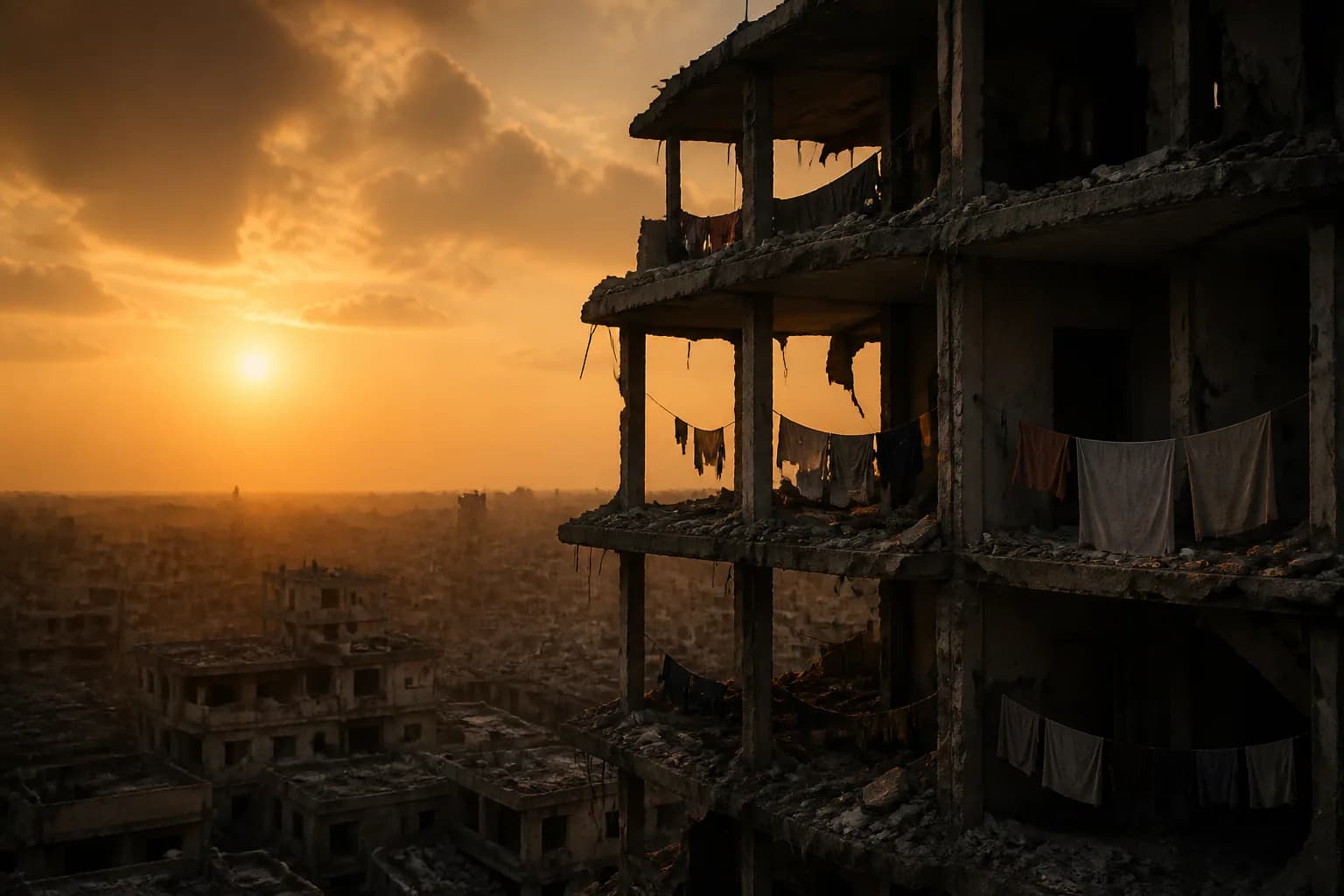
On August 21, 2013, rockets carrying sarin gas struck rebel-held suburbs of Damascus, killing at least 1,400 people by U.S. government estimates. The attack came a year after President Obama had called chemical weapons use a "red line" that would change his calculus on Syria, turning what had been a grinding but geographically contained civil war — already in its third year since the 2011 Arab Spring protests that first triggered it — into an international test case.
The mechanism that followed was improvised diplomacy replacing threatened force. Facing a skeptical Congress and a British Parliament that had just voted down military action by 285 to 272, the Obama administration accepted a Russian-brokered deal for Syria to surrender its chemical weapons stockpile to the Organisation for the Prohibition of Chemical Weapons rather than launching strikes. Assad's government handed over roughly 1,300 tons of declared agents by mid-2014, though later OPCW investigations found continued use of chlorine and sarin in smaller attacks for years afterward, including at Khan Sheikhoun in 2017.
Regionally, the war's infrastructure hardened around outside sponsors: Iran and Hezbollah backing Assad with fighters and financing, Gulf states and Turkey backing various rebel factions with arms and funding, and a fracturing opposition that extremist groups, better funded and more disciplined, increasingly out-organized. The absence of a decisive Western response left a vacuum that groups like Jabhat al-Nusra and, soon after, ISIS filled fastest.
Assad's government was the immediate beneficiary, surviving a moment that many analysts had expected to topple it. Civilians were the clearest losers, as the war's death toll climbed past 400,000 over its first decade and displaced roughly half of Syria's pre-war population of 22 million, producing the largest refugee population in the world for years running. Russia gained a durable foothold, later formalized by its September 2015 military intervention establishing an air base at Khmeimim, that outlasted the 2013 crisis itself.
Coverage at the time weighted the red-line reversal heavily as a story about Obama's personal credibility, while underweighting the structural signal it sent to other governments: that international enforcement of chemical-weapons norms would bend once a permanent Security Council member objected, and that declared limits were negotiable if the party crossing them had a powerful patron willing to spend diplomatic capital defending it.
That signal echoed forward. Russia's veto power protected Assad through years of subsequent Security Council resolutions on humanitarian access and accountability, previewing the diplomatic cover it would later extend over its own actions in Crimea and Ukraine. The Syrian refugee flows that began accelerating after 2013 also reshaped European politics for a decade, feeding the 2015 migration crisis and the nationalist parties that grew from it across Germany, France, and beyond.
Assad himself was eventually removed from power in December 2024, after a rebel offensive led by Hayat Tahrir al-Sham swept through the country following his Russian and Iranian backers' distraction elsewhere — a coda that closed the war's first chapter but left the institutional damage from 2013 largely intact.
Refugee flows into Turkey, Lebanon, Jordan, and Europe altered domestic politics far from the battlefield. Chemical-weapons red lines, Russian intervention, and proxy dynamics made Syria a grim seminar in limited war and humanitarian failure.
Siege warfare, barrel bombs, and chemical attacks redefined urban civilian risk for the century's second decade. Opposition fragmentation and jihadist spoiler dynamics made negotiated transition nearly impossible even when ceasefires briefly held. Humanitarian access became a bargaining chip rather than a norm.
Refugee resettlement politics in Europe and the U.S. fed domestic polarization far from the front. Russia's 2015 intervention locked a battlefield equilibrium favorable to Assad. The war's mechanism is attrition plus external patrons — a template later conflicts study whether or not they admit it.
Cultural heritage destruction and detainee testimonies entered the war’s evidentiary archive alongside battlefield maps. Accountability mechanisms lag the graves. For neighboring states, Syria remains a refugee, security, and drug-trafficking problem that outlived any single ceasefire announcement.
What remains is a weakened global norm against chemical weapons use, a hollowed Syrian state that a new transitional government inherited in deep disrepair, and a template for great-power patronage of client regimes that persisted well beyond Assad's own fall — one that shaped how Western governments calibrated, and often underestimated, their responses to subsequent conflicts.
Century Signals note: UN Human Rights Council and OPCW findings; major war correspondence; refugee-agency data. Editorial judgment about what still structures the present — not a comprehensive history.