The U.S. FDA granted emergency use authorization to the Pfizer-BioNTech vaccine on December 11, 2020, and to Moderna's vaccine a week later on December 18, roughly eleven months after Chinese researchers first published SARS-CoV-2's genetic sequence in January 2020 — compared to the four-to-fifteen-year timelines that had historically been standard for vaccine development, including the previous record of about four years for the mumps vaccine in the 1960s and the roughly five years typically required even under accelerated modern regulatory pathways.
The speed was possible because the underlying mRNA platform had been in development for decades, not built from scratch during the pandemic: biochemist Katalin Karikó and immunologist Drew Weissman, working together at the University of Pennsylvania, published foundational research in 2005 showing how to modify mRNA using a nucleoside called pseudouridine to avoid triggering a destructive immune response, work that struggled for grant funding for years — Karikó was demoted from her faculty position in the 1990s — because mRNA therapeutics were widely seen as commercially unproven at the time. Their research earned the 2023 Nobel Prize in Physiology or Medicine.
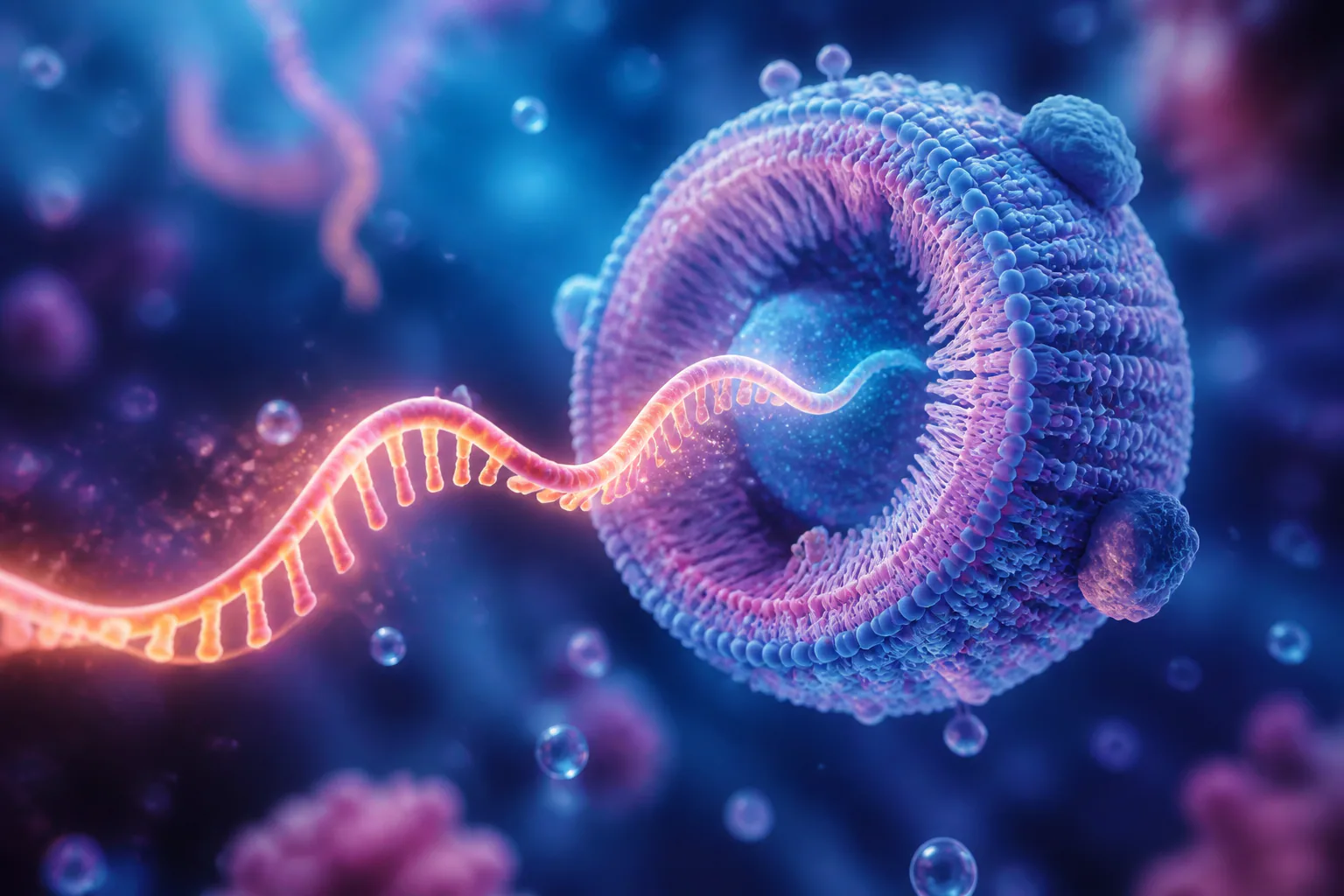
The remaining engineering problem — delivering fragile mRNA into human cells intact before it degraded — was solved through lipid nanoparticle technology developed over the preceding decade largely by companies including Arbutus Biopharma and Acuitas Therapeutics, which encapsulates the genetic material in a fatty shell that protects it until it reaches its target cells. Once SARS-CoV-2's sequence was public, BioNTech and Moderna could design a vaccine candidate within days by simply swapping in the new spike-protein sequence, because the delivery platform itself was already validated from years of prior work on other diseases including cancer and Zika vaccines.
Operation Warp Speed, backed by roughly $10 billion in U.S. federal funding, and parallel European and other national programs funded manufacturing capacity in advance of trial results, at significant financial risk, so that production could begin before any vaccine was proven safe or effective — a model that meant efficacy results and manufactured doses arrived almost simultaneously, rather than sequentially as in traditional vaccine development, where manufacturing scale-up typically only begins after approval.
Pfizer and Moderna captured enormous commercial success, with combined vaccine revenues exceeding $70 billion in 2021 and 2022 alone; lower-income countries received a much smaller share of early doses despite the COVAX initiative's aim to distribute vaccines equitably, with high-income countries securing an estimated 60 percent of global supply for roughly 16 percent of the world's population in the vaccines' first year — a gap that drew sustained criticism and highlighted how manufacturing capacity and advance-purchase agreements, not just funding, determined actual global access.
Coverage in late 2020 emphasized the unprecedented speed as a triumph of pandemic-era funding and coordination, somewhat underweighting the multi-decade foundational research, much of it unglamorous and underfunded for years, that made the speed possible at all — a framing gap that mattered because it understated how much sustained basic-science investment, not crisis response alone, drove the outcome.
Vaccine hesitancy emerged as a significant countervailing force even as the technology succeeded scientifically, with global surveys finding substantial minorities in many countries reluctant to take mRNA vaccines specifically because of their novelty, a skepticism that public health officials found difficult to fully address even with extensive safety data accumulated through 2021 and 2022 covering billions of administered doses.
Pfizer–BioNTech and Moderna authorizations validated decades of mRNA platform science under Operation Warp Speed timelines. Cold-chain logistics and boosters became household terms. Vaccine hesitancy and mandates polarized uptake even where supply existed.
Beyond COVID, the platform opened oncology and other infectious-disease pipelines that investors now price as a new modality class. Regulatory emergency pathways set precedents for future platforms. The shot in the arm was also a shot across the bow of slow vaccine industrial history.
Cold-chain logistics became a geopolitical capability. Patent and tech-transfer fights shaped who could manufacture at scale. The platform’s promise now rides on whether societies remember the success clearly enough to fund the next surge before panic returns.
The platform's success has since redirected substantial pharmaceutical investment toward mRNA-based therapeutics for cancer, HIV, and other diseases previously considered poor candidates for the technology, with several mRNA cancer vaccine candidates now in late-stage clinical trials — a research pipeline that traces its funding and credibility directly back to the emergency validation the pandemic forced in 2020.
Century Signals note: FDA/EMA authorization materials; pivotal trial publications in NEJM; manufacturing and distribution reporting. Editorial judgment about what still structures the present — not a comprehensive history.