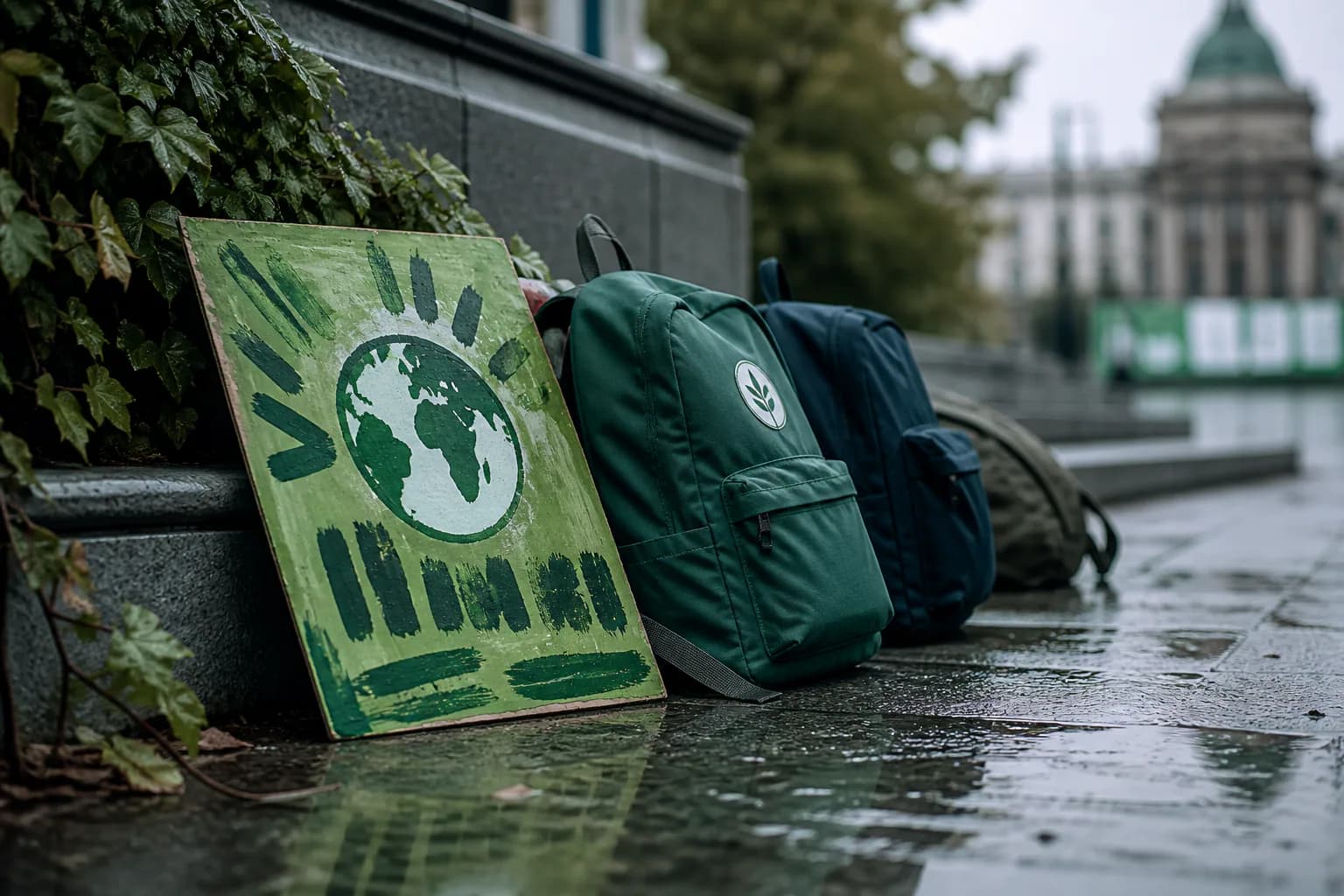
In August 2018, 15-year-old Greta Thunberg began sitting alone outside the Swedish parliament in Stockholm during school hours, holding a sign reading "Skolstrejk för klimatet" — school strike for climate — to protest inaction ahead of that September's Swedish general election, inspired partly by the Parkland students' walkouts earlier that year. She continued the strike every Friday afterward even once the election passed, and other students in Sweden and neighboring countries began joining within weeks, giving the movement its enduring name: Fridays for Future.
The movement scaled through decentralized, youth-organized local chapters rather than a top-down campaign structure, using social media, particularly Instagram and Twitter, to coordinate strike dates across time zones while leaving individual cities and schools to organize their own logistics, permits, and messaging — a structure that let it spread to over 150 countries within about a year without requiring formal institutional backing, funding, or a central office.
The largest coordinated action came on September 20, 2019, ahead of the UN Climate Action Summit, when an estimated four million people participated in strikes across more than 4,500 locations worldwide, according to organizer tallies compiled from local chapter reports — one of the largest coordinated climate protests in history up to that point, drawing participants from Sydney to Berlin to New York, where Thunberg herself had arrived weeks earlier after crossing the Atlantic by zero-emissions sailboat rather than fly.
Thunberg herself became the movement's most visible figure, addressing the UN Climate Action Summit on September 23, 2019, with a speech accusing world leaders of stealing her generation's future with "fairy tales of eternal economic growth," a moment that generated both intense support and, particularly from some political figures and commentators including then-President Trump, personal attacks on a minor that drew their own significant backlash and, in several cases, amplified the movement's visibility further.
The movement's clearest wins were agenda-setting rather than directly legislative: climate policy became a more prominent electoral issue across Europe, contributing to Green party gains in the May 2019 European Parliament elections, where Green groups won their best-ever result, and it pressured some companies and financial institutions to announce net-zero commitments, though enforcement and follow-through on those pledges varied widely and drew accusations of greenwashing in subsequent years.
Coverage often focused heavily on Thunberg as an individual — her Asperger's diagnosis, her personal story, her clashes with world leaders — somewhat underweighting the more structurally significant story of how quickly youth-led, internet-coordinated protest could organize globally without any centralized funding or leadership structure, a template later echoed by other youth movements addressing gun policy, racial justice, and other causes.
The pandemic interrupted the movement's momentum in 2020, shifting strikes online, and subsequent climate summits including COP26 in Glasgow and COP28 in Dubai have shown mixed follow-through on pledges made partly in response to the pressure Fridays for Future generated, with Thunberg herself becoming an increasingly sharp critic of what she called governments' insufficient action at those same summits.
Greta Thunberg's school strikes scaled into a global youth climate movement that shamed adult incrementalism in moral language. Media attention forced political leaders to answer children in public — a symbolic inversion that polling showed moved youth cohorts even when policy lagged.
COVID interrupted street momentum; litigation and electoral green platforms absorbed some energy. The durable mechanism was generational framing: climate as intergenerational theft, not only parts-per-million science. That frame still structures activist and corporate net-zero rhetoric.
School districts argued whether strikes were civic education or truancy. Fossil interests funded counter-narratives; brands funded youth-washing. The movement’s residue is a moral vocabulary that still forces adults to answer in public, even when policy crawls.
Youth turnout and green party surges in several countries borrowed the movement’s urgency even when they diluted its demands. Moral pressure rarely writes statutes alone; it changes who must answer questions.
The movement changed the baseline expectation that climate policy debates would include an organized, credible youth constituency demanding accountability — a presence still visible at COP negotiations and national elections today, even as the movement's peak mobilization scale has not been fully repeated since 2019. Youth-led climate litigation, including cases brought against national governments in the Netherlands, Germany, and elsewhere citing human-rights obligations, expanded substantially in the movement's wake, extending its pressure from the street into the courts.
Century Signals note: Contemporaneous Fridays for Future coverage; youth climate polling; later assessments of movement impact on politics. Editorial judgment about what still structures the present — not a comprehensive history.