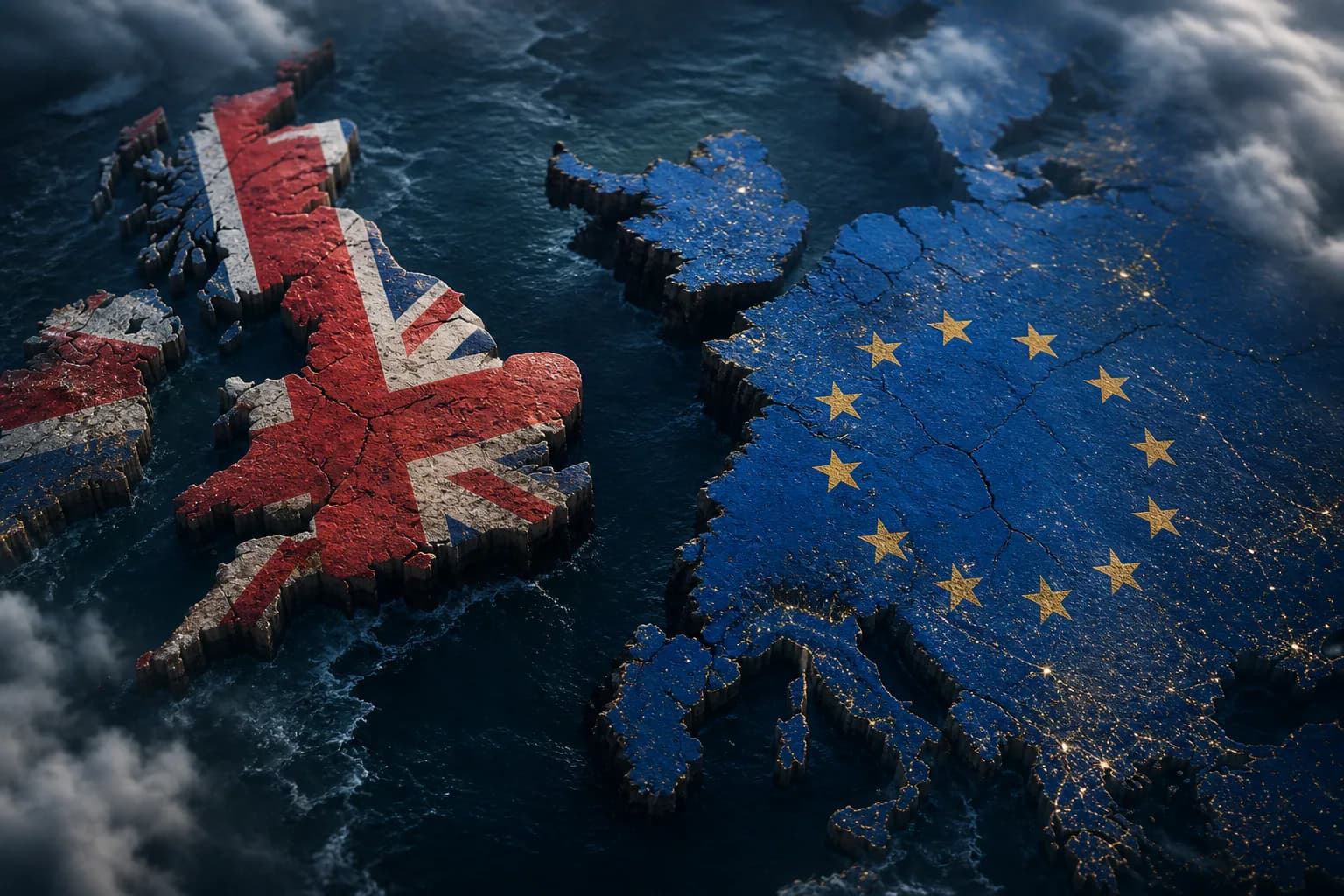
On June 23, 2016, British voters chose to leave the European Union by a margin of 51.9 to 48.1 percent, on turnout of 72 percent — higher than any UK general election since 1992. Prime Minister David Cameron, who had called the referendum in 2013 to settle divisions within his own Conservative Party and head off the rising UK Independence Party, resigned the next morning, having campaigned for Remain.
The Leave campaign's most cited claim — that the UK sent £350 million a week to the EU, money that could instead fund the National Health Service — was printed on the side of a campaign bus and later disavowed even by some Leave figures, including Nigel Farage the morning after the vote, as a gross figure that ignored the UK's rebate and EU spending returned to Britain. Immigration control and "take back control" of sovereignty and lawmaking proved the more durable organizing arguments over the campaign's final weeks.
The mechanism for actually leaving ran through Article 50 of the Lisbon Treaty, triggered by new prime minister Theresa May in March 2017, starting a two-year negotiating clock over a future relationship neither side had specified during the campaign. May's proposed withdrawal agreement failed three times in Parliament by historic margins, including a 230-vote defeat in January 2019, forcing her resignation in 2019 and a general election that returned Boris Johnson with an 80-seat majority on a promise to "get Brexit done."
The UK formally left the EU on January 31, 2020, with a transition period preserving existing trading rules until December 31, 2020, when a last-minute trade and cooperation agreement, finalized on Christmas Eve, avoided a disruptive no-deal exit. Financial services lost the most immediate ground, as London banks relocated an estimated £1.3 trillion in assets and thousands of jobs to Dublin, Frankfurt, Amsterdam, and Paris to retain EU market access; fishing and farming sectors that had campaigned hardest for Leave saw limited practical gains and, in fishing's case, new bureaucratic export delays.
Coverage in 2016 concentrated heavily on the immediate market shock — the pound's steepest one-day fall in over three decades, dropping more than 8 percent against the dollar — and underweighted the multi-year implementation grind that followed, particularly the Northern Ireland question: reconciling an open Irish border, required by the 1998 Good Friday Agreement, with a hard EU external border proved the single hardest unresolved problem, producing the Northern Ireland Protocol and years of subsequent renegotiation through the 2023 Windsor Framework.
Scotland, which voted to remain by 62 percent, saw renewed momentum for independence, feeding directly into the Scottish National Party's continued push for a second referendum, and the Good Friday Agreement's delicate balance came under sustained strain that outlasted the initial withdrawal deal by years. Trade friction with the EU, still the UK's largest trading partner even after departure, produced measurable but disputed drags on UK GDP growth in subsequent years, with the Office for Budget Responsibility estimating a long-run 4 percent reduction in productivity relative to remaining.
Business investment in the UK slowed measurably in the years immediately following the referendum as firms delayed decisions pending clarity on future trading terms, a hesitation the Bank of England later identified as a meaningful drag on growth independent of the eventual deal's specific terms.
Leave's narrow win converted a party-management gamble into a constitutional rupture. Sovereignty, migration, and NHS messaging collided with City of London warnings; first-past-the-post politics met a binary ballot. Implementing withdrawal agreements consumed years of parliamentary bandwidth.
Northern Ireland's protocol dilemmas, labor shortages, and trade frictions showed divorce costs are paid in logistics, not slogans. EU institutions lost a large member but gained clarity that exit is real. British politics realigned around a decision that cannot be fully unwound.
Farmers, fishers, and manufacturers discovered trade friction as paperwork mountains. Identity politics outlasted economic spreadsheets on both sides. Brexit’s mechanism is path dependence: once a constitutional rupture is voted, politics reorganizes around managing the rupture.
Brexit's core legacy is procedural as much as economic: it demonstrated that a referendum result without a pre-agreed implementation plan can consume a government's entire political bandwidth for years, a lesson other democracies now weigh whenever a binding vote on a complex institutional relationship is proposed.
Century Signals note: Official referendum results; UK-EU withdrawal agreement materials; contemporaneous political and trade reporting. Editorial judgment about what still structures the present — not a comprehensive history.