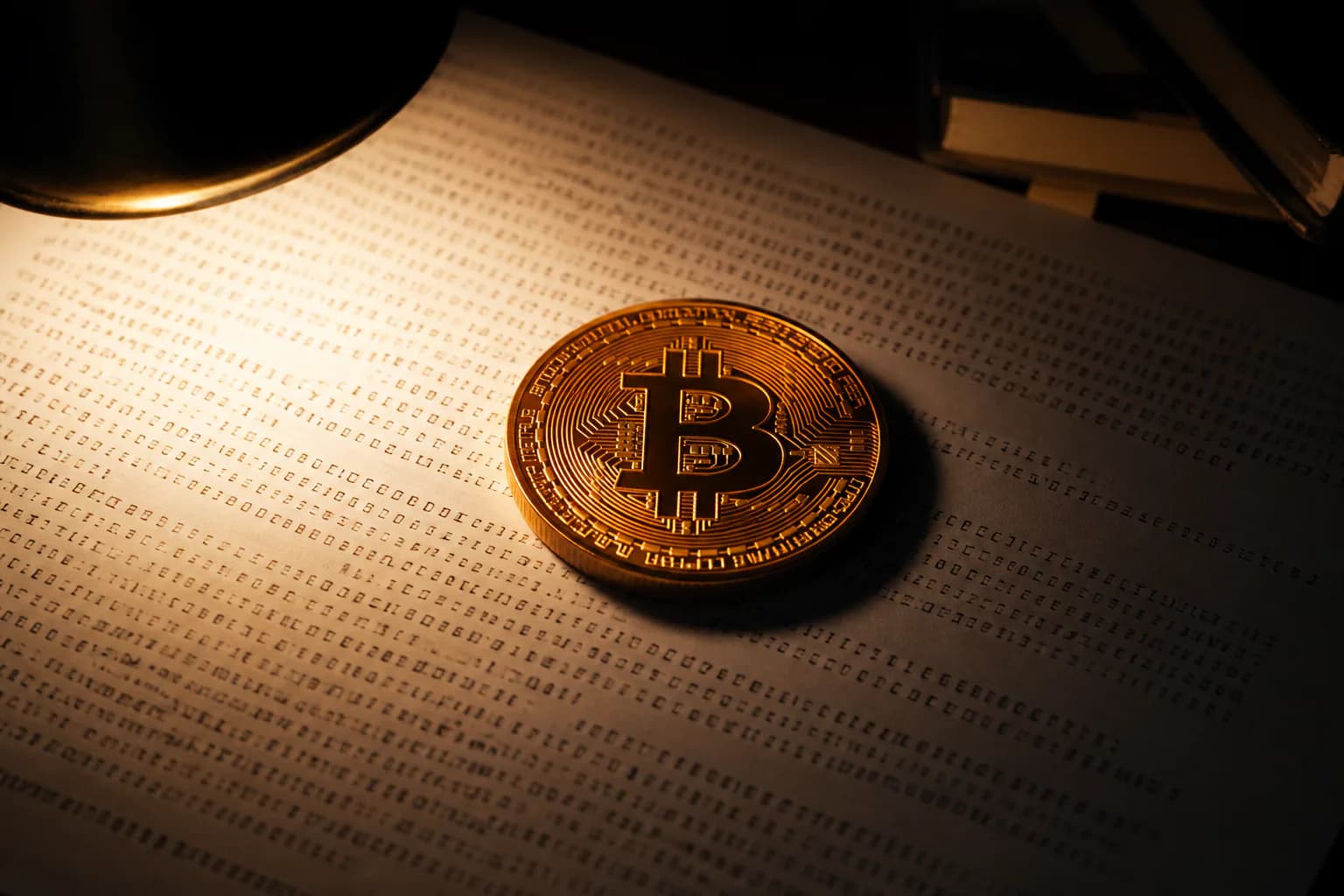
On October 31, 2008, an author using the name Satoshi Nakamoto posted a nine-page paper, “Bitcoin: A Peer-to-Peer Electronic Cash System,” to a cryptography mailing list, three weeks after Lehman's aftershocks had frozen credit markets. The timing was coincidental to the paper's technical content but not to its reception: a system claiming to need no bank, clearinghouse, or central issuer landed while trust in exactly those institutions was cratering.
The paper solved a specific, previously unsolved problem: how strangers with no reason to trust each other could agree on a single, unforgeable transaction history without a central referee. Its answer was proof-of-work — computers competing to solve costly puzzles to append blocks of transactions — combined with a rule that the longest valid chain wins, making rewriting history exponentially expensive as the chain grows.
The mechanism replaced institutional trust with replicated computation and economic incentive: miners earn newly issued coins and fees for honest bookkeeping, and anyone can independently verify the entire ledger rather than take a bank's word for a balance. Bitcoin's genesis block, mined in January 2009, embedded a Times of London headline about a second bank bailout — a small, deliberate jab at the system it proposed to bypass.
Early adopters were cryptographers and libertarian technologists trading coins for negligible value; a 2010 purchase of two pizzas for 10,000 bitcoins became the field's most-cited example of value nobody could yet price. What broke, over the following decade, was the assumption that “trustless” meant trust-free: exchanges like Mt. Gox, which handled an estimated 70 percent of global bitcoin trades before its 2014 collapse with roughly 850,000 missing coins, showed that most users ended up trusting intermediaries again, just new ones instead of banks.
Mining itself evolved from a hobbyist's laptop to an industrial process: by the mid-2010s, purpose-built chips called ASICs and warehouse-scale mining farms, many clustered where electricity was cheapest, had replaced the individual enthusiasts Nakamoto's paper imagined verifying transactions from home, concentrating the very verification power the design had tried to distribute.
Coverage in the paper's first years was confined to mailing lists and hobbyist forums; when mainstream media arrived, years later, it fixated on speculation, crime on dark markets, and volatile prices, giving comparatively little attention to the governance question buried in the design — who decides on protocol changes when there is no CEO, a fight that surfaced explicitly in the 2017 block-size dispute that split Bitcoin from Bitcoin Cash.
Central banks now run digital-currency pilots, stablecoins move more dollar-equivalent value daily than many national payment systems, and every “trustless” pitch in fintech still argues with Nakamoto's premise, whether extending it or rebutting it. The energy debate the paper triggered — proof-of-work's electricity use — remains unresolved enough that major blockchains since have chosen different consensus mechanisms specifically to avoid it.
El Salvador's 2021 decision to make bitcoin legal tender, and the U.S. Securities and Exchange Commission's 2024 approval of spot bitcoin exchange-traded funds — letting ordinary brokerage accounts hold bitcoin exposure without touching a wallet or exchange at all — both represent the asset's slow absorption into the exact financial institutions its founding paper proposed to route around.
Satoshi Nakamoto's white paper proposed a peer-to-peer electronic cash system that solved double-spending without a trusted mint — by making miners compete to append a public ledger. The Genesis block's embedded newspaper headline about bank bailouts framed the project as a political artifact as much as a cryptographic one.
Early cypherpunk mailing lists and Mt. Gox's later collapse taught that protocol trust and exchange trust are different species. Mining pooled into industrial farms; energy debates followed. Whether Bitcoin becomes digital gold or fails as money, it permanently expanded the Overton window for programmable settlement.
Nation-states eventually had to decide whether to ban, tax, or imitate the asset. Central-bank digital currency research is partly a response to the political possibility Bitcoin opened. Even skeptics now argue inside a monetary imagination that 2008 expanded.
What endures from 2008 is not the price chart but the protocol-first proposition: that monetary infrastructure could be software governed by open rules instead of an institution governed by discretion. Whether that proposition succeeded, failed, or merely relocated the problem is still being argued in courtrooms and legislatures, which is itself evidence the question mattered.
Century Signals note: Bitcoin white paper (2008); early bitcoin-list archives; contemporaneous exchange and mining reporting; later ETF and energy-use coverage. Editorial judgment about what still structures the present — not a comprehensive history.