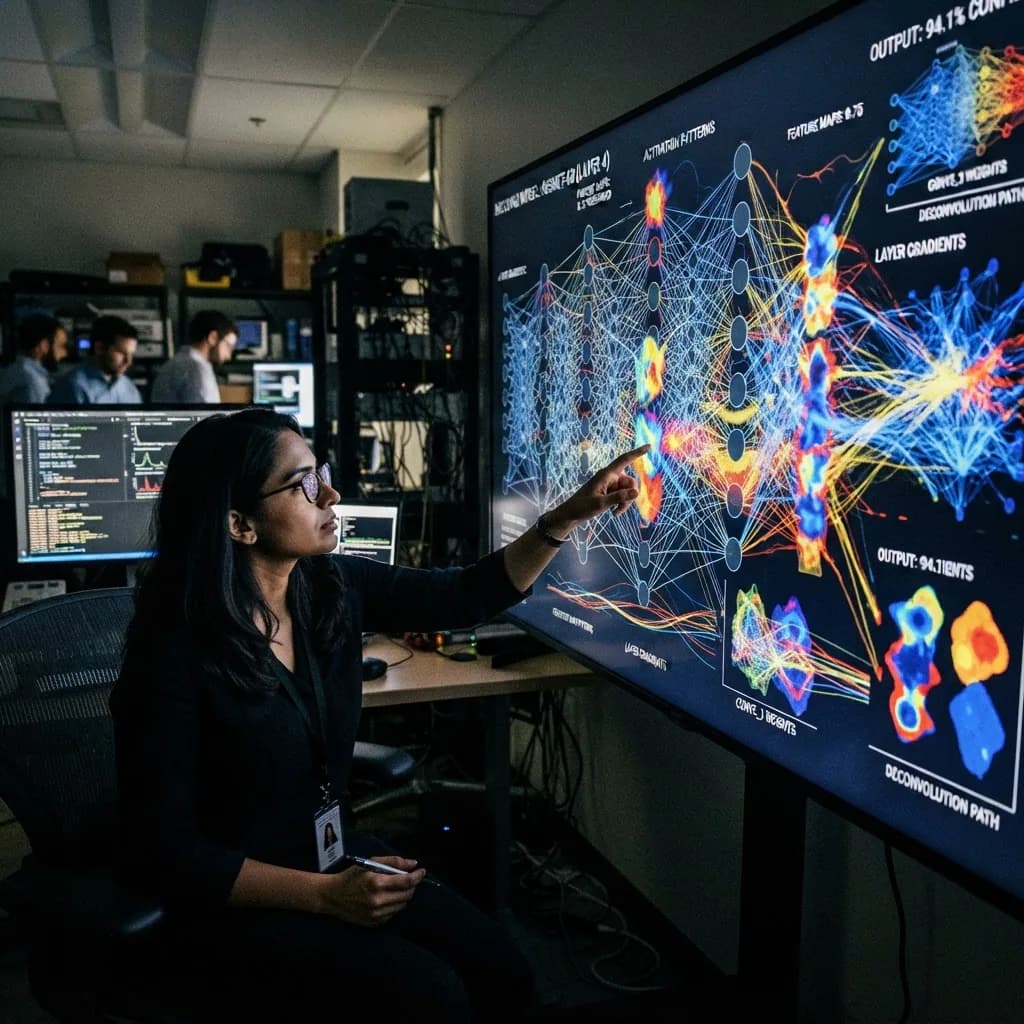
At the European Centre for Medium-Range Weather Forecasts, a forecast now sometimes comes from two systems running side by side: the physics-based Integrated Forecasting System that has been the institution's backbone for decades, and the AI Forecasting System, a learned model the center made operational in 2025 after years of internal testing against approaches like Google DeepMind's GraphCast.
Traditional numerical weather prediction encodes known physical laws directly and computes forward from them, which is accurate but computationally expensive and slow at high resolution. Learned models instead find statistical patterns in decades of historical data that approximate the same physics far more cheaply — GraphCast's published benchmarks showed it outperforming traditional approaches on many standard accuracy measures while running in a fraction of the time — but they inherit their training data's blind spots, struggling precisely on the rare, extreme events that matter most for disaster preparedness, because those events are, by definition, underrepresented in historical records.
Agencies responsible for public safety forecasting face a genuine institutional dilemma. The cheaper, faster learned models are attractive for operational reasons, but replacing physics-based methods wholesale risks degrading exactly the tail-event accuracy that justified investing in weather infrastructure in the first place — which is why ECMWF runs its AI system alongside the physics-based one rather than in place of it.
Hybrid approaches, where learned models handle routine forecasting and physics-based simulation is reserved for extreme or unusual conditions, are emerging as the pragmatic middle path across the field, capturing the speed benefit without fully abandoning the physical guarantees that matter most.
The atmosphere does not care which architecture predicts it, but the people relying on that prediction to evacuate before a storm very much do — and ECMWF running both systems side by side, rather than retiring the older one, is the clearest signal yet that the center itself does not think the tail-event problem is solved.